


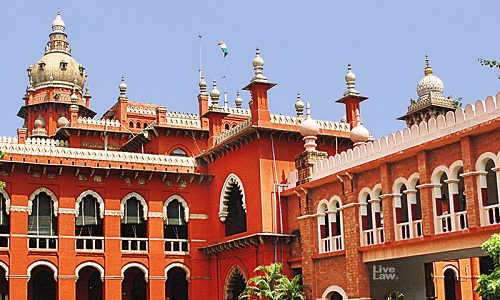
In a significant and contentious legal development, the Madras High Court's recent decision has sparked intense debate and concerns across India. The court's ruling mandates that Hindus seeking to install Ganesha idols in public spaces must first seek permission from local "jamaats," community bodies predominantly associated with Islamic traditions. This directive has raised alarms among Hindu communities and ignited a firestorm of criticism regarding religious freedoms and the secular fabric of India.
The controversy stems from a petition filed in the Madras High Court, which challenged the installation of Ganesha idols in public spaces without the consent of local Muslim community bodies. The petition argued that such installations could potentially disturb communal harmony and disrupt the religious sentiments of Muslims residing in those areas. In response, the court upheld the petition, issuing a directive that mandates Hindus to obtain prior permission from local jamaats before proceeding with any public displays of Hindu religious symbols, including Ganesha idols.
The Madras High Court's decision has evoked strong reactions from various quarters. Hindu religious leaders and organisations have vehemently opposed the ruling, arguing that it undermines their religious rights and freedoms guaranteed by the Indian Constitution. Critics contend that such a precedent sets a dangerous precedent for religious minorities dictating religious practices to the majority community, potentially leading to widespread communal tensions.
Political parties across the spectrum have also weighed in on the issue. Opposition parties have criticised the ruling as an encroachment on secular principles and a capitulation to religious majoritarianism. Conversely, proponents of the court's decision argue that it promotes religious tolerance and sensitivity towards minority communities' sentiments, thus fostering communal harmony.
The implementation of Sharia law principles, albeit indirectly through judicial directives, marks a significant departure from India's secular legal framework. Critics fear that such decisions could pave the way for further encroachments on secularism and embolden demands for religious accommodations that could potentially erode the country's pluralistic ethos.
The broader implications of this decision extend beyond religious freedoms to encompass questions of judicial independence, constitutional protections, and the balance between religious rights and state authority. Legal experts anticipate that the issue may escalate to higher courts, where the fundamental principles of secularism and constitutional rights will face rigorous scrutiny.
In conclusion, as India grapples with the aftermath of the Madras High Court's decision, the nation finds itself at a critical juncture where the boundaries between religious freedoms, secular governance, and communal harmony are fiercely contested. The ramifications of this ruling are poised to shape the socio-political landscape for years to come, prompting soul-searching debates about the country's commitment to pluralism and the protection of individual rights.
In the face of mounting controversy and public outcry, the path forward remains uncertain, with stakeholders from all sides seeking clarity on the limits of religious accommodations within India's constitutional framework. As the debate unfolds, the nation watches closely, wary of the potential ramifications of what many perceive as a watershed moment in India's legal and social history.




















Comments (1)
M
It is a serious issue and they are doing proper planning to make India as Muslim country