


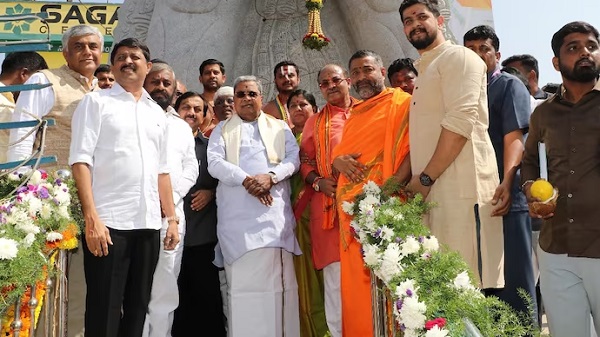
In a move that has stirred both admiration and criticism, the Congress-led Karnataka government has proposed the renovation of 100 Ram temples across the state. This decision has sparked debates regarding the apparent shift in stance by the Congress party, particularly in light of its historical positions on matters concerning religious institutions, especially those associated with Hinduism.
The proposal to renovate Ram temples across Karnataka underscores a complex interplay of politics, identity, and governance. It also invites scrutiny into the perceived double standards of political parties, particularly the Congress, known for its secular credentials.
The decision to allocate funds for the renovation of Ram temples comes at a time when the political landscape in India is marked by heightened religious sensitivities and polarizations. The Ram temple issue, in particular, has been a longstanding subject of contention, often serving as a symbolic battleground for competing political ideologies.
Critics of the Congress party have been quick to point out what they perceive as glaring inconsistencies in its stance on matters related to Hindu religious institutions. They argue that the Congress has historically positioned itself as a champion of secularism and has been critical of overt displays of religious fervor, especially those associated with Hindu nationalist agendas.
Indeed, during the contentious debates surrounding the construction of the Ram Mandir in Ayodhya, the Congress party was vocal in its opposition, citing concerns about communal harmony and secular principles. The party's leaders often criticized what they viewed as attempts to politicize religion for electoral gains and questioned the need for grandiose displays of religious symbolism.
Against this backdrop, the decision to fund the renovation of Ram temples seems paradoxical to many observers. They interpret it as a calculated political maneuver aimed at appeasing certain segments of the electorate, particularly Hindu voters, without regard for ideological consistency.
While critics may decry what they perceive as the Congress party's double standards, it is essential to recognize the nuanced dynamics at play. The decision to fund the renovation of Ram temples may indeed be driven by political considerations, but it also highlights the evolving nature of Indian democracy and the imperative for political actors to respond to the aspirations and demands of the electorate.



















Leave Your Comment