


The Supreme Court’s observation today that “better sense will prevail” amid protests by the Cockroach Janta Party (CJP) against Chief Election Commissioner Gyanesh Kumar has brought an important question into focus: can a political protest justify disrupting the livelihoods of ordinary citizens? While the right to peaceful assembly is a constitutional guarantee, it cannot be exercised without regard for the rights of others. The court’s remarks on Friday, October 16, underline the need for responsibility in political mobilisation, particularly when demonstrations threaten to affect traders, street vendors and daily-wage earners during the festive season.
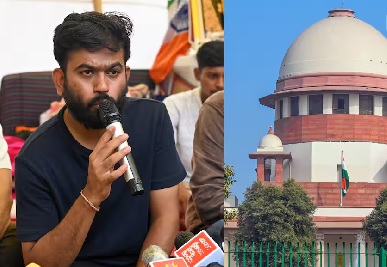
The Supreme Court's observations present a challenge to CJP founder Abhijeet Dipke, whose proposed gathering at Central Park in Connaught Place has drawn objections from traders concerned about business disruption. A political movement seeking to establish its credibility must demonstrate that its methods are consistent with the public interest it claims to represent. When a protest risks imposing its financial costs on people who have no direct connection with the dispute, its organisers must answer difficult questions about responsibility and restraint.
A bench comprising Chief Justice of India Surya Kant and Justice Joymalya Bagchi made it clear that the interests of protesters cannot be considered in isolation. The court expressed concern about the hardship that restrictions and disruptions could cause small shopkeepers and their families, particularly during a period when festive demand can be crucial to their annual earnings.
Chief Justice Kant’s emphasis on the livelihood of small traders offers a reminder that constitutional democracy must protect more than the right to political expression. It must also safeguard the ability of ordinary citizens to work, conduct business and earn an honest living. A demonstration that prevents customers from reaching shops, obstructs access to commercial establishments or disrupts public transport can impose a burden far beyond its intended political audience.
The court also indicated that compensation could be considered if protests caused business losses. Justice Bagchi told advocate Jai Anant Dehadrai, representing a traders’ association, that the court could exercise its powers under constitutional tort jurisdiction if the alleged losses were established to be unlawful.
The advocate claimed that disruptions around Connaught Place were causing losses exceeding ₹250 crore a day. That figure remains an allegation placed before the court, rather than an established judicial finding. Nevertheless, the underlying concern deserves serious attention: even a short period of restricted access can cause significant difficulties for small businesses operating on narrow margins.
For CJP and Dipke, the lesson should be straightforward. A political cause does not automatically justify the economic hardship imposed on unrelated citizens. Protest organisers must consider the location, timing, expected turnout and likely consequences of their actions before calling supporters onto the streets.
CJP's decision to organise a gathering in a busy commercial district also raises questions about political judgment. Connaught Place is not merely a symbolic public space; it is a major commercial centre supporting shops, restaurants, service establishments, vendors and workers. Restrictions on movement can affect people whose incomes depend on daily customer footfall.
The New Delhi Municipal Council's notification ordering Central Park's closure on October 16 and 17 has added another dimension to the controversy. A street vendor at Palika Bazar, Anil Kumar Gupta, approached the Delhi High Court, expressing concern that the gathering could lead to restrictions on roads, footpaths and Metro station entrances. The High Court recorded an assurance from Additional Solicitor General Chetan Sharma that police had taken steps to regulate CJP's activities and would take all possible measures under the law.
Dipke must recognise that the use of the national flag and the invocation of constitutional rights do not remove the obligation to respect the rights of fellow citizens. If the objective is to raise concerns about electoral-roll revision and alleged irregularities, the movement must also show that its chosen methods are proportionate, lawful and considerate of those who may be affected.
The Supreme Court's message is timely: the right to protest is indispensable, but so is the right to livelihood. CJP cannot reasonably demand that its political grievances be heard while dismissing the economic concerns of those who may bear the cost of its mobilisation. A responsible democratic movement must defend constitutional rights without turning other citizens into collateral victims of political confrontation.






















Leave Your Comment