


It is believed that “Fiction precedes scientific innovations.”
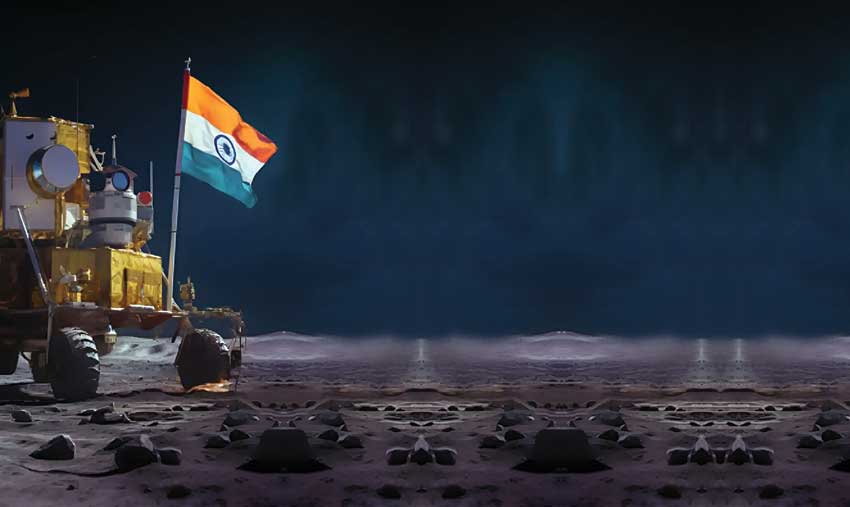
Most of the fictional miracles are reality today. The landing of Vikarm from Chandrayaan is no exception.
Is it a sheer coincidence that much before Modern science proved, Indian folklore called the moon ‘Chanda Mama’ the brother of Mother Earth being called Bhudevi or our forefathers were aware of the relationship it had with Earth?
My first encounter with Indian fascination with the moon was at the time of visiting first India International Trade Fair also called Asia 1972 which started in New Delhi from 3rd November to 17 December 19, 1972. It was a new experience for Indian citizens but you will be surprised to know the most popular pavilion was from the USSR and the reason was because it was displaying the soil brought from the moon. When my mother took me there to stand in a long queue, I was puzzled as to why more than a thousand people were wasting time on such a trivial issue. The puzzle was solved the moment I saw one billion people celebrating the soft landing of Chandrayan 3.
Should a developing country like India waste money on Chandrayaan missions?
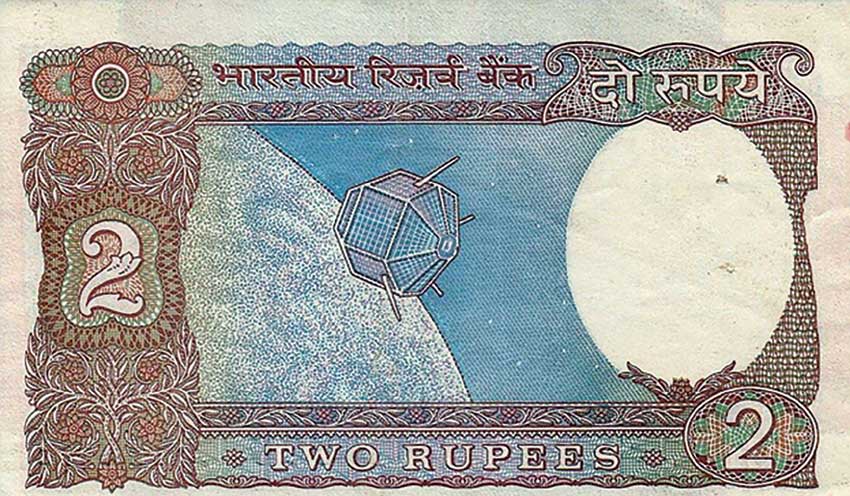
Detractors say,” You give me good roads, I will go to the moon myself” as if both are mutually exclusive. Either you can have Development or scientific progress! History has proved that both go hand in hand. The first satellite ‘Aryabhatta' was launched on 19 April 1975. A power failure halted experiments after four days and 60 orbits with all signals from the spacecraft lost after five days of operation. Will any sane person believe that the economic growth rate in 1974-75 was 0.2 percent? I heard this news while standing in a long ration queue. Had India bought the argument of vilifiers at that time and abandoned space research then we would have been suffering the curse of severe floods and cyclones resulting in huge loss of property and lives. Better forecasting of weather supported by improved telecommunications has resulted in better harvests, safe fishing in the deep sea, etc The space mission has influenced India to the extent that the picture of ‘Aryabhatta’ was depicted on the two rupee currency notes for a long time.
Let’s take an example from American history which revolutionized American aviation history in the last century.
Charles Lindbergh crossed the Atlantic in his plane in May 1927.
Before Charles Lindbergh made the first solo, nonstop flight across the Atlantic, America was lagging at 5th place in aviation. People were not feeling safe in air travel. The common use of airplanes was to carry mail. (As told to me at the National Air and Space Museum Washington). But post Lindbergh's (an ex-air mail pilot) historical solo flight Americans gained a new confidence in air travel. Suddenly, everybody wanted to fly. Because of Lindbergh’s flight, the aviation industry took off and stocks of the aviation industry soared. It helped the US in the second world war as well.
ISRO and the Indian space industry are better placed.
Unlocking India's Potential in the Space Sector, K Sivan said, “these reforms “will be critical for not just India's growth, but for the space sector around the world. This sector will grow in all dimensions to provide services to customers, and India should be at the forefront of that revolution.”
( https://yourstory.com/2020/08/public-private-partnership-spacetech-isro)
India has at least 140 registered space-tech start-ups- It’s one of India’s most sought-after sectors for venture capital investors. During recently concluded PM Modi’s US visit
White House’s statement said the two leaders “called for enhanced commercial collaboration between the U.S. and Indian private sectors in the entire value chain of the space economy.”
(https://www.whitehouse.gov/briefing-room/statements-releases/2023/06/22/joint-statement-from-the-united-states-and-india/#:~:text=21.,and%20strategic%20technology%20cooperation%20goals)
The US sees space as an arena in which India can emerge as a counterweight to China as its fastest-growing large economy and a thriving center of innovation.
The Indian space sector is now driven by private enterprises joining ISRO rather than financed by government budgets, Indian space technology is empowering smaller-scale, commercial purposes. Imaging systems feed information about the planet, helping India’s farmers insure their crops or commercial fishing boats track their catch.
Satellites bring phone signals to the country’s remotest corners and help operate solar farms far from India’s megacities. Had these interventions not been there, what would have been the fate of digital India? What revenue the government would have earned by selling non-existing spectrum?
The government agency’s “workhorse” rocket is one of the world’s most reliable for heavy loads having a success rate of 95 percent, reducing the cost of risk mitigation for a satellite. As a result, India is one of the most competitive service providers.
ISRO is earning by launching equipment into space: the $6 billion market at present could triple in value by 2025.
Economic benefits of the Chandrayaan mission
“The success of Chandrayaan-3 is definitely a matter of national pride and is likely to reflect not only on equity market sentiment but also will bring about a change in perception of foreign investors towards India’s capability in space research and effectiveness of various initiatives such as Make in India and Atmanirbhar Bharat,” said Swapnil Shah, Director - Research, StoxBox.
The space economy is a high-growth area. The global space economy has reached a value of USD 546 billion in 2023 showing a remarkable growth of 91 percent over the past decade. India is poised to play a pivotal role in this exponential growth. The success of Chandrayaan-3 could contribute significantly to India’s space economy, projected to be worth USD 13 billion by 2025. This boost can lead to employment generation, an increase in private investments, and the growth of the country’s space-tech ecosystem.
Successful landing is a testament to India’s capabilities and it could enhance investor confidence. This could magnetize a greater inflow of international investments. The mission can lead to unlocking of commercial avenues in the space domain. Sectors such as telecommunications, remote sensing, and satellite navigation stand to gain.
Equity market.
● The national pride and euphoria accompanying a successful landing could positively influence market sentiment, potentially giving a boost to stock prices. Challenges, including a potential failed landing like Chandrayaan 2 or unforeseen delays, might cast a temporary shadow on market enthusiasm. But the determination and the ability to learn from failures have forced the world to view the Chandrayaan mission in its totality. The long-term advantages and economic management of the mission are likely to overshadow transient setbacks and Global Investors may prefer to stay informed and maintain a holistic view which will open up doors for various sectors such as aerospace, defense, and telecommunications (satellite communication and navigation), as well as listed companies such as L&T, HAL and MTAR Technologies and others.
● Employment and Skill Development
A highly skilled workforce in science, engineering, and various technical disciplines is the need of the hour. The Chandrayaan missions have confirmed the potential to create high-tech jobs. The space sector’s growth can offer a diverse range of employment opportunities ranging from research scientists and engineers to technicians and administrative staff. These missions are particularly important for India, where the need for skilled labor and the potential for job creation have gained prominence.
● Innovation and inventions.
Chandrayaan-3’s successful landing signifies India’s technological achievements against the odds, the Nambi Narayan case itself is proof of vested interests hampering the mission. The mission’s triumph achieved despite the setbacks of the last mission has highlighted India’s continued perseverance and dedication to pushing the boundaries of innovation. This achievement has resonated globally, Even the public in Pakistan is praising ISRO.
The understanding gained about the lunar surface and environment will be paving the way for reduced risks associated with lunar exploration.
The world has taken note and is eager to learn the strategies which have helped to manage the mission at a fraction of the cost in comparison to the cost incurred by advanced countries.
● Gaining acceptance and aiming at controlling the race.
Chandrayaan-3’s success could position India as an important participant in the emerging space race focused on building permanent lunar infrastructure. China and Russia’s collaboration on a Moon base and the International Lunar Research Station have indicated that joining Similar initiatives could help India with opportunities for collaboration, resource utilization, and cutting-edge research. Indo-American joint statement showcases its commitment to international cooperation in space
Participation in the New Space Race
Chandrayaan-3’s success could position India as a significant player in the emerging space race focused on building permanent lunar infrastructure. As demonstrated by China and Russia’s collaboration on a Moon base and the International Lunar Research Station, participation in such initiatives could provide India with unique opportunities for collaboration, resource utilization, and cutting-edge research. India’s alignment with the Artemis Accords is proof of its commitment to international cooperation in space exploration.
Conclusion.
The successful landing of Chandrayan can lead to unlocking thousands of dreams that nobody is aware of! My trekking experience in the Himalayas has taught me that as soon as you climb peak new horizons open up. The nation is in a state of euphoria and will strive to make it happen. None of our research or technological advancements like digital India, ADHAR, or Jan Dhan accounts were aimed at managing calamities like COVID-19, but equipped with these resources we managed COVID better and helped the world to do the same. Time to shade our fears and negativity to embrace hope and enthusiasm for reclaiming our legitimate position.

By Rakesh Kumar
(The content of this article reflects the views of writers and contributors, not necessarily those of the publisher and editor. All disputes are subject to the exclusive jurisdiction of competent courts and forums in Delhi/New Delhi only)





















Leave Your Comment