


In a significant political reversal, the nascent electoral understanding between the Aam Aadmi Party (AAP) and the Indian National Congress for the upcoming Chandigarh mayoral elections has disintegrated, with both parties deciding to contest independently. This breakdown, occurring just days before the January 29 poll, has dramatically reshaped the contest and handed a substantial advantage to the Bharatiya Janata Party (BJP), which now emerges as the clear frontrunner.
The alliance, which was never formally announced, unraveled even before the nomination process began on Thursday. Sources indicate that while the two opposition parties had arrived at a tentative verbal understanding to present a united front against the BJP, they chose to back out swiftly, fearing immediate political repercussions.
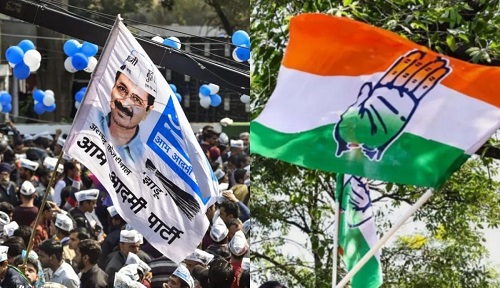
The collapse was made public by AAP’s Punjab in-charge, Jarnail Singh, who declared the party would go solo in a statement that left no room for future cooperation. "There is no alliance of the Aam Aadmi Party with the Congress anywhere, nor can there ever be any alliance," Singh asserted. He launched a sharp attack on both national parties, accusing the Congress of looting the country "in collusion with the BJP" and positioning AAP as the sole "real voice of the common man's struggle."
The primary reason for the abrupt collapse appears to be rooted in state-level politics, specifically the upcoming Punjab Assembly elections scheduled for next year. Leaders from both the AAP and Congress in Punjab are understood to have pressured their central leadership against formalizing the alliance.
For AAP, which governs Punjab, and the Congress, which is the principal opposition in the state, a formal partnership in Chandigarh would have been difficult to justify to their respective voter bases in Punjab. The two parties are locked in a direct and intensely competitive struggle there, making any cooperation at any level a potentially confusing and damaging prospect ahead of the state polls. The fear of a political backlash in their core battleground ultimately outweighed the potential benefits of a local alliance in the Union Territory.
The decision to split the anti-BJP vote has all but sealed the outcome in the 35-member Chandigarh Municipal Corporation. The BJP, with 18 councilors, commands the single largest bloc. The Congress has 7 councilors, AAP has 6, and the Shiromani Akali Dal (SAD) has 1, with 3 nominated members.
Had AAP and Congress united, they could have posed a competitive challenge with a combined strength of 13 votes. By contesting separately, they will divide this opposition vote, making the BJP’s path to victory for the mayor, senior deputy mayor, and deputy mayor posts significantly smoother. Both the AAP and Congress are now set to field their own candidates for all three positions despite lacking the numbers to win independently.
Following the breakdown, the Congress announced its slate of candidates: Gurpreet Gabi for Mayor, Sachin Galav for Senior Deputy Mayor, and Nirmala Devi for Deputy Mayor. AAP is expected to announce its candidates shortly.
The failed alliance underscores the persistent challenges in forging a cohesive opposition front against the BJP, even at the local level, where conflicting state interests can derail cooperation. For the residents of Chandigarh, the political maneuvering signals a likely continuation of BJP’s hold on the city’s civic administration.
As the January 29 election approaches, all eyes will be on the final nominations and the campaign rhetoric, which is likely to be dominated by mutual accusations between the AAP and Congress, even as the BJP campaigns from a position of strength. The episode serves as a stark reminder that in Indian politics, national opposition ambitions are frequently held hostage by complex regional realities.




















Leave Your Comment