


In a political showdown that captured national attention, the ruling alliance in Jharkhand emerged victorious in a crucial floor test held in the state assembly. The dramatic vote, which saw the ruling alliance secure 47 votes, including that of a nominated member in the 81-member House, underscored the political resilience and determination of the incumbent government.
The opposition NDA alliance, by contrast, received 29 votes, reflecting a significant margin of victory for the ruling coalition led by Chief Minister Champai Soren. The necessity of the floor test arose following the swearing-in of the new government just months ahead of both Lok Sabha and assembly elections, injecting an added layer of intensity and scrutiny into the proceedings.
Champai Soren, a seasoned politician at 67, assumed office following the resignation of his predecessor, Hemant Soren, who stepped down amid controversy surrounding his arrest by the Enforcement Directorate in a money laundering land scam case. The presence of the former chief minister, Hemant Soren, during the floor test proceedings added to the intrigue, highlighting the intricate dynamics at play within Jharkhand's political landscape.
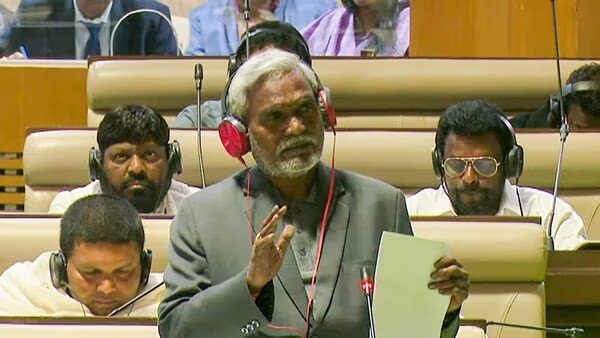
During his address to the assembly, Chief Minister Champai Soren leveled serious allegations against Jharkhand Governor CP Radhakrishnan, implicating the Raj Bhavan in his predecessor's arrest. Soren's impassioned rhetoric underscored the deep-seated tensions and power struggles that have come to define the political climate in the state. He asserted that the rights and safety of marginalized communities, particularly tribals and Dalits, were under threat under the present regime—a sentiment that resonated strongly within the assembly halls.
Despite facing significant legal challenges, including being in the custody of the Enforcement Directorate due to ongoing investigations into a money laundering case, Soren remained resolute in his commitment to governance and his party's vision for the state. His defiant stance against what he perceived as political machinations orchestrated by the BJP underscored the entrenched rivalries and ideological divisions that have shaped Jharkhand's political landscape.
The floor test debate served as a platform for Chief Minister Champai Soren to accuse the BJP of utilizing central agencies to undermine and destabilize the democratically elected government. His accusations resonated with members of his coalition and garnered support from allies and sympathizers alike. The narrative of political vendetta and manipulation lent credence to the broader narrative of resistance and defiance against external interference in the state's affairs.
The resounding victory of the Champai Soren government in the floor test drew praise and validation from key political figures, including Congress leader Jairam Ramesh, who lauded the coalition's decisive win. The triumph in the face of adversity was seen as a reaffirmation of the coalition's strength and unity in the pursuit of governance and representation for the people of Jharkhand.
As Chief Minister Champai Soren navigates the complexities of governance and legal challenges in the days ahead, the outcome of the floor test stands as a testament to the enduring spirit of democracy and the power of collective action in the face of adversity. For Jharkhand, the road ahead may be fraught with challenges, but the resilience and determination exhibited in the assembly chambers offer hope for a brighter and more inclusive future.





















Leave Your Comment