


Amid escalating tensions in West Asia and growing concerns over global energy supplies, the Central government has constituted a high-level inter-ministerial group led by Defence Minister Rajnath Singh to closely monitor the evolving situation and its domestic implications. The panel includes key ministers such as Home Minister Amit Shah, Finance Minister Nirmala Sitharaman, and Petroleum Minister Hardeep Singh Puri, reflecting the seriousness of the crisis and its potential impact on India’s economy.
The formation of this group comes at a time when disruptions in global oil and gas supply chains have raised alarms. The ongoing conflict involving Iran, alongside the strategic blockade of the Strait of Hormuz, has intensified fears of a prolonged energy crisis. This crucial maritime route accounts for nearly 20–25 million barrels of oil per day—roughly one-fifth of the world’s total supply. Before the escalation, India sourced about 12–15 percent of its crude oil through this corridor.
To mitigate the economic fallout, the Centre has taken swift fiscal measures. In a significant relief to consumers, excise duty on petrol has been reduced to ₹3 per litre, while diesel has been exempted entirely from central excise duty. Additionally, a windfall tax of ₹21.5 per litre has been imposed on diesel exports to stabilize domestic availability.
The government has also revised taxes on Aviation Turbine Fuel (ATF), introducing a new excise duty of ₹50 per litre. However, exemptions ensure that the effective rate is capped at ₹29.5 per litre in certain cases, providing much-needed relief to the aviation sector, which is highly sensitive to fuel price volatility.
Officials indicated that these adjustments are part of a broader strategy to maintain stability in fuel prices and prevent inflationary pressures from spilling over into the wider economy.
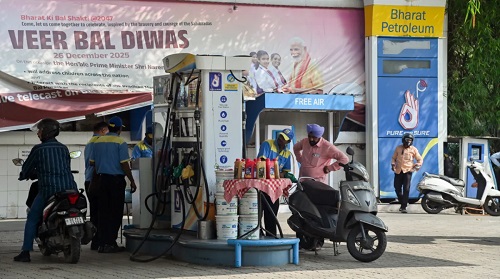
Amid rumours of fuel shortages, the Ministry of Petroleum and Natural Gas has reassured citizens that there is no disruption in supply. All retail fuel outlets across the country are operating normally, with adequate stocks of petrol and diesel available. The government has urged the public to avoid panic buying, emphasizing that the situation is under control.
The energy crisis has been exacerbated by the ongoing conflict involving the United States, Israel, and Iran. Despite public calls for de-escalation by former US President Donald Trump, hostilities continue to intensify.
The Israel Defense Forces (IDF) recently confirmed strikes on key Iranian military infrastructure, including a major missile production facility in Yazd. According to the IDF, the site played a central role in the development and storage of advanced missile systems intended for maritime and strategic targets. Additional strikes reportedly targeted ballistic missile production facilities and other defence infrastructure in Tehran.
With the geopolitical situation remaining volatile, India’s proactive approach—combining strategic oversight with economic interventions—aims to safeguard national interests and cushion citizens from global shocks. The high-level monitoring group is expected to continuously assess developments and recommend further measures as needed.
As the crisis unfolds, the government’s focus remains on ensuring energy security, economic stability, and public confidence in the face of global uncertainty.

















Leave Your Comment