


The Union Cabinet’s decision to continue the National Social Assistance Programme (NSAP) for another five years, from 2026-27 to 2030-31, reinforces the government’s commitment to providing financial support to vulnerable sections of society. With an approved outlay of ₹53,428 crore, the programme will continue to serve millions of elderly people, widows and persons with disabilities. The proposed changes to disability pension eligibility are particularly significant, as they seek to extend assistance to a wider group of persons with disabilities. Alongside this social welfare decision, the Cabinet’s approval for the strategic restructuring of IDBI Bank signals a parallel effort to strengthen the banking sector and support economic growth.
The Union Cabinet has approved the continuation of the National Social Assistance Programme for five years, covering the period from 2026-27 to 2030-31, with an outlay of ₹53,428 crore. The decision seeks to maintain a financial safety net for vulnerable citizens while introducing changes to disability pension eligibility and continuing existing support for elderly people, widows and families in need.
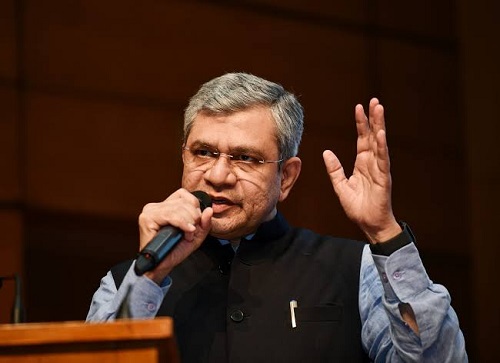
Briefing the media after the Cabinet meeting, Information and Broadcasting Minister Ashwini Vaishnaw said the approval would benefit approximately 3.2 crore people across all 36 states and Union Territories. The scale of the programme underlines the importance of social assistance in a country where a substantial section of the population continues to depend on public support to meet basic needs.
One of the key changes concerns the assistance provided to persons with disabilities. Under the revised provisions announced by the government, the pension amount will be ₹375 for beneficiaries up to the age of 79 and ₹625 for those aged 80 and above. The decision is intended to provide continued financial assistance to eligible beneficiaries, although the adequacy of these amounts in meeting everyday expenses remains an important consideration.
The Cabinet has also approved a change in the benchmark disability criterion under the Pradhan Mantri Samajik Sahayata Yojana, reducing the threshold from the existing 80 per cent to 40 per cent, according to the minister's briefing. The minimum age requirement for disability pension eligibility will also be removed, allowing eligibility from birth. These changes could make social assistance accessible to more people who have previously remained outside the coverage of the pension framework.
The revision in disability criteria is particularly important because persons with disabilities often face additional expenses related to healthcare, mobility, rehabilitation and everyday living. For many families, even a modest pension can provide some financial relief. Lowering the eligibility threshold may also help address gaps in the existing system, although effective implementation, transparent identification of beneficiaries and timely payments will determine the programme's actual impact.
Meanwhile, pension schemes for elderly people and widows, along with the family benefit scheme, will continue in their existing form. Maintaining these provisions offers continuity to beneficiaries who rely on regular assistance. However, the broader challenge for social welfare policy remains balancing the reach of such programmes with the rising cost of living and the need to ensure that support reaches those most in need.
The NSAP extension also highlights the role of the Centre and states in delivering welfare benefits. With beneficiaries spread across 36 states and Union Territories, coordination among government agencies will be essential to ensure that eligible citizens are not excluded because of administrative delays or documentation-related difficulties. Better awareness, accessible application procedures and effective grievance redressal can help translate the Cabinet's decision into meaningful relief.
In a separate decision, the Cabinet approved the strategic restructuring of IDBI Bank. Vaishnaw said the bank plays an important role in supporting micro, small and medium enterprises (MSMEs) as well as emerging industries. He added that a strategic partner had been selected and that fresh capital would be infused with its assistance. The government and the Life Insurance Corporation of India will retain a combined 34 per cent stake in the restructured entity.
The restructuring is significant because banks are central to the availability of credit for businesses, particularly MSMEs, which often face difficulties in securing affordable finance. A stronger capital base and an effective strategic partnership could help improve the bank's capacity to lend, strengthen its operations and support industrial expansion. The eventual outcome, however, will depend on the terms of the restructuring, the partner's contribution and the bank's ability to improve its competitiveness and financial performance.
Taken together, the two Cabinet decisions address different but complementary policy priorities. The continuation of NSAP focuses on income support and social protection, while the restructuring of IDBI Bank seeks to strengthen a financial institution with a role in enterprise development. One concerns the immediate needs of vulnerable households; the other aims to improve the institutional capacity required for economic activity and investment.
The broader test for both initiatives will be implementation. For NSAP, the priority will be ensuring that assistance reaches eligible beneficiaries reliably and that revised disability criteria translate into wider access. For IDBI Bank, the focus will be on whether the restructuring improves operational efficiency, lending capacity and support for businesses. The Cabinet's approvals establish the policy direction, but their lasting value will ultimately be measured by the tangible benefits they deliver to citizens and the wider economy.






















Leave Your Comment