


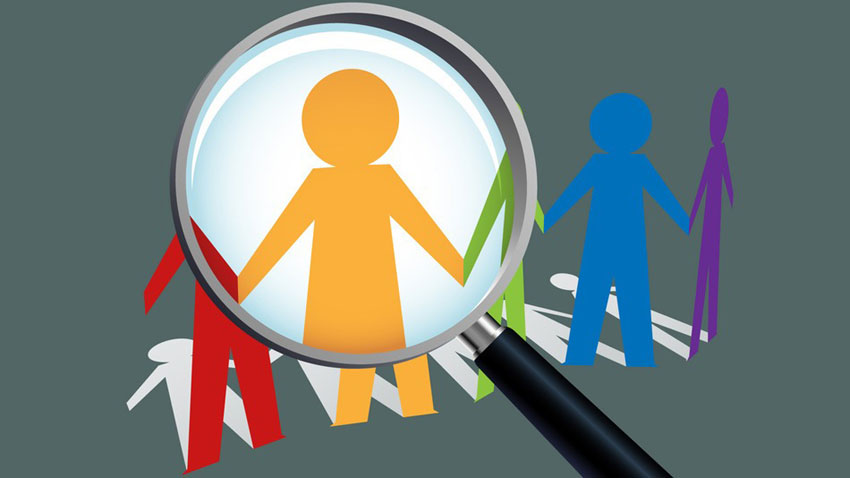
Caste is a complex and deeply entrenched social system in India, with a long history and a significant impact on society and politics. Caste census is a term used to describe the enumeration of the population by caste. It is a complex and controversial issue, with both proponents and opponents.
Caste census demands have been resurrected as a result of the Central Government's response to the Supreme Court's caste census ruling. In their affidavit, the government stated that it was unable to perform a caste census due to technical issues. The Centre's position before the Supreme Court was in response to a plea from the Maharashtra government requesting that data on the Backward Class of Citizens (BCC) be collected for the Census 2021.
Caste census demand extends beyond politics. The greatest caste-based affirmative benefit initiative in the world is administered by India. Caste identities are used to grant reservation in educational institutions and government positions.
Caste and tribal identities form the basis of the quotas for the Scheduled Castes (SCs), also known as Dalits, at 15per cent and the Scheduled Tribes (STs), at 7.5per cent. The BP Mandal Commission determined the Other Backward Classes' (OBCs') backwardness on the basis of caste; hence the greatest reservation mandate for OBCs—27per cent—is caste-based.
The reservation for OBCs is not based on their proportion of India's population, unlike the quotas for Dalits and STs, which are proportionate to their populations as determined by censuses held every ten years.
OBC quota was set at 27per cent since there wasn't enough room to preserve the reservation maximum at 50per cent. The OBC population was projected to be 52per cent of the population by the Mandal Commission. The demand that "jiski jitni sankhya bhari, uski utni hissedari" (every caste group should obtain representation proportionate to their share of the population) was made by politicians like SP president Akhilesh Yadav as a result.
Congress testing the Caste waters
The Congress approach was evident recently as the Election Commission (EC) released the calendar for the Assembly elections in five states: test the caste gambit in these elections, and then amp it up later for the Lok Sabha.
Following a meeting of the Congress Working Committee, the party declared that, if elected to office, it will conduct a caste census and pass legislation to abolish the 50per cent cap on reservations for SC, ST, and backward classes in order to grant them representation in line with their population. This occurred a few days after Prime Minister Narendra Modi used the Rahul Gandhi-inspired catchphrase "Jitni aabadi, utna haq" during the Karnataka Assembly elections to criticise the Congress.
Before the Lok Sabha elections in April–May 2024, the high-stakes state elections are crucial checkpoints for both the Congress and the BJP. In particular, for the main Opposition party, winning its two home states and gaining power in a third would help it establish itself as the dominant player within the INDIA alliance and give it an advantage in the contest for seat-sharing.
The party appears to be placing a lot of weight on the OBC vote, portraying the caste census as a "powerful step" towards the emancipation of the underprivileged and "opening a new paradigm for development." Modi has criticised the "Jitni aabadi, utna haq" slogan and said that the BJP only supports the lower caste.

Will it help INDI ALLIANCE?
The 26-party opposition coalition was initially referred to as INDIA, which alarmed the overconfident BJP. A caste census is now being demanded by the INDIA alliance, which has the potential to upend politics similar to the Mandal vs Kamandal politics of the 1990s.
The Modi administration doesn't want to touch the caste census since it will show the precise percentage of forward, backward, and other backward castes in India's population. The Rashtriya Swamsevak Sangh's (RSS) vision of a unified Hindu Samaj is directly at odds with this.
However, not everyone in the opposition alliance is happy with the demand. The chief minister of West Bengal, Mamata Banerjee, is the lone opposition leader who is uneasy with the demand. She believes that it will benefit the opposition coalition in the Hindi heartland but harm her party, giving the BJP an opportunity to capitalise on the situation. Although caste plays no role in Bengali politics, Banerjee worries that a sizable portion of OBC supporters would defect to the BJP, which has been successful in luring some Scheduled Caste and Schedule Tribe voters away from the Trinamool Congress.
The RSS's deepest fear is that competing castes will seek their fair portion of the welfare budget, dividing the Hindu population and preventing them from voting as a single, cohesive bloc for the BJP. The 80 seats in Uttar Pradesh, where voter support is crucial to governing India, have helped BJP greatly. The BJP's chances could be threatened by a caste census in the state.
Bihar Caste Survey: Danger Bell for BJP
The opportunity to attack and splinter the BJP's umbrella social coalition in north and central India, which Prime Minister Narendra Modi and Home Minister Amit Shah painstakingly stitched together over the past ten years, presents itself to the ruling alliance in Bihar and the opposition Indian National Developmental Inclusive Alliance (INDIA) nationally by playing up the tenet of the unity of the marginalised. The Bharatiya Janata Party's (BJP) ability to manage social contradictions, uphold the principle of Hindu social unity while accommodating its diversity, and carry out its political project of "inclusive Hindutva" will be put to the test, arguably the biggest in its period of hegemony. While the release of the data itself has presented opportunities and threats to both parties, how things turn out will first depend on how the national Opposition's call for a caste census interacts with the potential sub-categorization of other backward classes (OBCs) in the Rohini commission report. Additionally, it will rely on how the BJP and the INDIA coalition translate the new arithmetic into chemistry, as well as on organisational outreach on the ground and the issue of political message for various social groups. And until that occurs, it would be premature to claim that this is a new Mandal moment with the same kind of dramatic and transformative influence on Indian politics as the adoption of the commission's recommendations had. 2023 is not 1989–1990, after all.
Whether the BJP confronts an existential problem, it does have a number of choices to address it. One may reasonably infer that the main goal of the BJP is to maintain its 60per cent coalition in states like Bihar and UP, which consists of upper castes, the most backward Dalits, and the poorest Dalits. Yadavs, Muslims, and the somewhat more powerful Ambedkarite Dalits are not included in the equation.
Only when upper castes, a majority of the most backward, and a majority of the poorest Dalits support the party is this 60per cent achievable. Whatever the reason, upper castes are uneasy with the caste census because, in their eyes, it speaks of even more diminished representation across educational, governmental, and political institutions and it mirrors efforts to split the Hindu vote. It may be motivated by a fear of losing power. When defining its own position on the survey, the BJP must contend with this.
The results of the caste survey also demonstrate that the BJP has support from both segments of dominant OBCs (such as Kurmis) and a larger proportion of non-dominant OBCs; these groups are aware that their numbers are significantly higher than their share in power and are sensing an opportunity to demand reparative justice. When defining its position, the BJP must also address this.
If this was the earlier, pre-Modi BJP, one may have predicted that the caste census and its findings would be met with a natural, cultural, and political opposition. However, the BJP led by Modi and Shah is very concerned about maintaining its broader social base.
While both the national parties have their own reason regarding the caste census. Let us examine the social and political implications of such an exercise.
Social and Political Implications of Caste Census
Caste census can have both positive and negative social and political implications.
Positive Implications
Caste census can help to identify and address the needs of marginalized and disadvantaged castes. For example, the data from caste census can be used to design policies and programs to improve the access of these castes to education, employment, and healthcare. Caste census can also help to monitor the progress of affirmative action programs and identify any gaps or loopholes. For example, the data from caste census can be used to ensure that the reserved seats in educational institutions and government jobs are being filled by the eligible candidates. Caste census can also provide a comprehensive picture of Indian society, including its caste dynamics. This data can be used by researchers, policymakers, and civil society organizations to better understand the challenges faced by marginalized and disadvantaged castes and to develop effective interventions to address these challenges.
Negative Implications
Caste census can be divisive, as it could lead to increased social tensions and conflict. For example, the data from caste census could be used by political parties to mobilize voters along caste lines. Caste census can also be counterproductive, as it could reinforce caste identities and hierarchies. For example, the data from caste census could be used by caste groups to assert their dominance over other caste groups. Caste census can also be impractical, as it would be difficult and expensive to conduct a caste census accurately. For example, many people may be reluctant to disclose their caste, especially if they belong to a marginalized or disadvantaged caste.
The Way Ahead
The way ahead on the issue of caste census is to have a balanced and nuanced approach. It is important to weigh the pros and cons of caste census carefully and to take steps to mitigate the potential negative impacts.
One way to do this is to conduct a caste census in a transparent and inclusive manner. All stakeholders, including caste groups, civil society organizations, and academic experts, should be consulted in the design and implementation of the census.
Another way to mitigate the negative impacts of caste census is to ensure that the data is used for the right purposes. The data should be used to design and implement policies and programs to promote social justice and equality, and to monitor the progress of affirmative action programs. The data should not be used to mobilize voters along caste lines or to reinforce caste identities and hierarchies.
Challenges
There are a number of challenges that need to be addressed in order to conduct a caste census in India.
One challenge is that there is no universally accepted definition of caste. This can make it difficult to enumerate the population by caste accurately.
Another challenge is that many people may be reluctant to disclose their caste, especially if they belong to a marginalized or disadvantaged caste. This could lead to undercounting of these castes.
A third challenge is that the data from caste census could be misused for political or social ends. It is important to take steps to prevent this from happening.
Conclusion
Caste census is a complex and controversial issue, with both proponents and opponents. It is important to weigh the pros and cons of caste census carefully and to take steps to mitigate the potential negative impacts.
A balanced and nuanced approach to caste census is needed. The census should be conducted in a transparent and inclusive manner, and the data should be used for the right purposes. The challenges of conducting a caste census in India need to be addressed carefully.

By NILABH KRISHNA
(The content of this article reflects the views of writers and contributors, not necessarily those of the publisher and editor. All disputes are subject to the exclusive jurisdiction of competent courts and forums in Delhi/New Delhi only)




















Leave Your Comment