


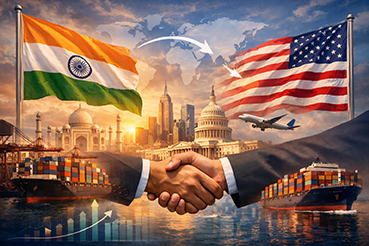
The Indo–U.S. trade relationship has frequently been assessed through the prism of what it ostensibly lacks: a comprehensive free trade agreement, sweeping tariff eliminations, or a single, dramatic breakthrough that captures global attention. However, such a narrow evaluation overlooks the underlying sophistication of the engagement. When examined through the lens of negotiation strategy and diplomatic prudence, India–United States trade relations reflect not a failure of consensus-building but a case study in deliberate, calibrated, and strategically restrained negotiation. The recently concluded interim trade agreement between the two nations exemplifies this cautious yet forward-looking approach. Rather than rushing into an expansive and potentially imbalanced agreement, India and the United States have opted for a phased framework that allows incremental trust-building and policy alignment. The interim arrangement is expected to be implemented swiftly, laying the groundwork for deeper economic integration while negotiations continue toward a comprehensive Bilateral Trade Agreement (BTA). Crucially, the United States has indicated willingness to consider further tariff reductions on Indian goods during subsequent BTA discussions, demonstrating that the interim pact is not a culmination but a stepping stone toward broader economic cooperation. From a strategic perspective, the interim agreement represents more than a routine policy exercise; it marks a milestone that could significantly influence India’s economic trajectory. By reducing trade barriers in selected sectors and facilitating smoother market access, the pact is poised to stimulate export growth and enhance India’s participation in global supply chains. In an era marked by shifting trade alignments and geopolitical realignments, the strengthening of Indo–U.S. economic ties holds both commercial and strategic importance. One of the most significant beneficiaries of this framework is likely to be India’s Micro, Small, and Medium Enterprises (MSME) sector. MSMEs form the backbone of India’s manufacturing and export ecosystem, yet they often struggle with regulatory complexities and limited access to global markets. By harmonising standards and streamlining compliance requirements, the agreement could enable these enterprises to expand their global footprint, thereby generating employment and fostering regional economic development. Additionally, the services sector, which has emerged as a major driver of India’s growth, stands to gain from enhanced mobility provisions and collaborative technological initiatives embedded within the evolving trade framework.
Against this backdrop, it cannot be gainsaid that the agreement aligns with India’s broader aspirations to emerge as a global manufacturing and digital innovation hub. Cooperation on technology standards, digital trade, and intellectual property frameworks could strengthen India’s capacity to attract foreign investment and integrate into advanced technology supply chains. As global economies increasingly prioritise resilience and diversification, India’s growing partnership with the United States enhances its credibility as a reliable economic partner and manufacturing destination. Nevertheless, the success of the interim agreement will depend heavily on effective implementation. Policymakers must ensure that the benefits of the pact permeate across sectors and geographies. Small exporters operating along India’s coastal regions, agricultural producers seeking new markets, and technology innovators in urban hubs must all experience tangible advantages from the agreement. Without inclusive implementation, the transformative potential of the trade framework may remain underutilised. The broader significance of the Indo–U.S. trade engagement lies in its negotiation ethos. India has demonstrated a willingness to engage constructively while safeguarding its domestic economic priorities. By resisting pressure for rapid, sweeping concessions and instead pursuing a phased and strategic negotiation model, India has maintained leverage in shaping the contours of the future BTA.

Deepak Kumar Rath














Leave Your Comment