


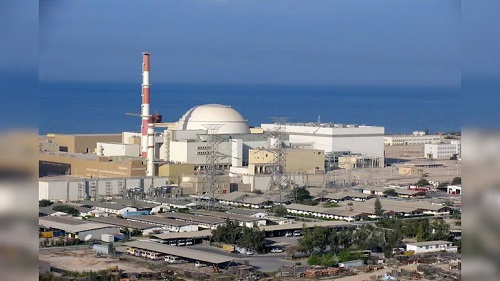
Tensions in the Middle East have taken a deeply concerning turn after a projectile landed just 350 metres from Iran’s Bushehr Nuclear Power Plant on Saturday. The incident marks the fourth such strike since the conflict escalated on February 28, raising fears of a potential nuclear disaster with far-reaching consequences across the Gulf.
Iran’s Foreign Minister Abbas Araghchi issued a stark warning, stating that continued attacks on the facility could trigger radioactive fallout capable of “ending life in GCC capitals, not Tehran.” His remarks underscore the growing anxiety among Gulf nations that a direct hit on the plant could unleash a catastrophe transcending national borders.
The Bushehr plant, Iran’s only operational civilian nuclear facility, has a history shaped by geopolitical upheaval. Construction began in 1975 under the Shah’s regime with Germany’s Siemens at the helm. However, the project was derailed by the Iranian Revolution and the Iran-Iraq War.
Efforts to revive the project in the late 1980s faltered when Germany withdrew amid proliferation concerns. It was eventually Russia that stepped in, taking over construction in 1996 and completing the plant in 2013 after years of delays caused by financial disputes and international pressure.
Today, the facility operates a 1,000-megawatt pressurized water reactor, contributing roughly 1–2 percent of Iran’s electricity. Tehran has also been working to expand the site, with plans to add two additional reactors, each capable of generating another 1,000 megawatts.
The Bushehr reactor uses uranium fuel supplied by Russia, enriched to about 4.5 percent—suitable for civilian energy production. However, the real concern lies in the large volume of nuclear material stored at the site, including both active fuel and spent fuel.
Experts warn that the plant houses significant quantities of hazardous radioactive substances, particularly Caesium-137. The amount present in spent fuel is believed to exceed levels released during the Chernobyl disaster, making any potential leak extremely dangerous.
Compounding the risk is the plant’s design. Parts of the facility, including fuel storage pools, are relatively exposed and potentially vulnerable to missile or drone strikes. A successful hit could release radioactive particles into the atmosphere, triggering immediate casualties and long-term environmental damage.
Geography amplifies the danger. The city of Bushehr, home to around 250,000 people, lies closer to several Gulf capitals than to Tehran. Cities like Kuwait City, Manama, Doha, and Saudi Arabia’s eastern hubs—Dammam, Dhahran, and Al Khobar—are all within a few hundred kilometres across the Persian Gulf.
Prevailing northwesterly winds, combined with the natural barrier of the Zagros Mountains, could carry radioactive fallout directly toward these densely populated regions. This raises the spectre of widespread contamination affecting air, soil, and water supplies.
The stakes are particularly high for Gulf countries, where freshwater scarcity is a critical issue. Nations across the region depend heavily on desalination plants that draw water from the Persian Gulf. Any radioactive contamination of these waters could disrupt the primary source of drinking water for over 18 million people.
A nuclear incident at Bushehr could therefore trigger not just a health crisis, but a humanitarian emergency, crippling water supplies and food systems across multiple countries for years—if not decades.
Warnings from international experts and agencies, including the International Atomic Energy Agency, have highlighted the risks associated with military activity near nuclear facilities. Even a near miss, like the recent strike, serves as a stark reminder of how fragile the situation is.
As the conflict continues with no clear resolution in sight, the repeated targeting—or near-targeting—of such a sensitive installation raises urgent questions about escalation control and the rules of engagement in modern warfare.
The Bushehr plant, once envisioned as a symbol of Iran’s civilian nuclear ambitions, now stands at the center of a potentially devastating geopolitical and environmental crisis—one that could impact millions far beyond Iran’s borders.




















Leave Your Comment