


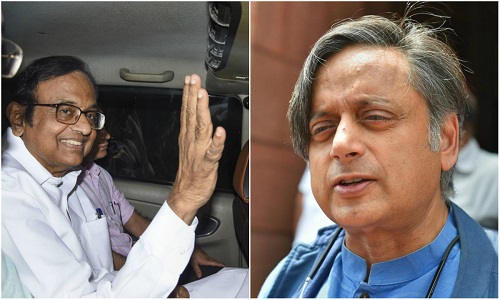
India’s hosting of the 18th BRICS Summit has unexpectedly become a subject of political debate after Congress leaders P Chidambaram and Shashi Tharoor offered sharply different assessments of the grouping’s relevance. While Chidambaram questioned whether recent BRICS summits had delivered tangible benefits to India, Tharoor defended the event as evidence of the country’s growing diplomatic convening power. The contrasting positions underline a larger question: how should the success of diplomacy be measured in an increasingly fragmented international order?
Chidambaram’s criticism is rooted in a familiar argument in foreign-policy debates—the demand for measurable outcomes. India participates in several major international groupings, including BRICS, the Shanghai Cooperation Organisation, the G20 and the Quad. His contention is that membership and summit diplomacy should ultimately translate into concrete economic, strategic or political gains. From this perspective, merely hosting international leaders cannot by itself constitute diplomatic success.
Such scrutiny is legitimate in a democracy. Foreign policy involves substantial national resources and must therefore be subjected to public evaluation. Multilateral institutions can lose their effectiveness if declarations repeatedly fail to produce implementation. India, like every major power, has an interest in ensuring that international engagements contribute to trade, investment, technology, energy security, geopolitical stability and national interests.
However, Shashi Tharoor's argument highlights a different dimension of diplomacy. He described BRICS as an important platform for the Global South and emphasised that the grouping represents a substantial proportion of the world's population and economic output. His argument is that diplomatic value cannot always be reduced to an immediate transaction or a single policy announcement.
This distinction is important. International diplomacy frequently produces results through sustained engagement rather than instant agreements. The opportunity for leaders to meet, exchange assessments, negotiate differences and build political confidence can itself create strategic value. In an era marked by geopolitical rivalry, supply-chain disruptions, conflicts and uncertainty over the international economic order, maintaining channels of communication has become increasingly significant.
India's decision to host the BRICS Summit also carries symbolic importance. Bringing senior leaders and representatives of influential emerging economies to New Delhi provides India an opportunity to shape discussions on global governance, development, technology, sustainability, economic cooperation and the concerns of developing countries. Hosting such a gathering does not automatically guarantee success, but it creates diplomatic space that can be converted into outcomes through sustained negotiation.
The disagreement between Chidambaram and Tharoor therefore reflects two legitimate approaches to assessing foreign policy. One stresses deliverables; the other emphasises influence, visibility and the ability to bring competing powers to the same table. A mature assessment should accommodate both.
The BJP's response, meanwhile, has transformed the issue into a broader political contest over India's diplomatic record. Its criticism of Chidambaram suggests that the ruling party sees international engagement as an important component of India's changing global profile. Yet political rhetoric should not obscure the substantive question of what BRICS can actually deliver.
Ultimately, India's BRICS presidency should be judged neither by the number of leaders attending the summit nor by political slogans surrounding it. Its credibility will depend on whether dialogue produces practical cooperation and strengthens India's ability to advance national and Global South interests.
The controversy may therefore serve a useful purpose. Rather than asking whether summit diplomacy is valuable or worthless, India should ask a more constructive question: how can diplomatic convening power be transformed into economic, strategic and institutional outcomes? That is the standard by which BRICS—and India's wider foreign policy—should ultimately be evaluated.




















Leave Your Comment