



NILABH KRISHNA
For much of the post-Cold War era, the architecture of global power appeared relatively settled. The United States and its allies dominated the principal political, financial, technological and security institutions, while the developing world largely operated within rules and systems designed elsewhere. That arrangement was never entirely uncontested, but alternatives remained fragmented. BRICS was born in this environment as a grouping of major emerging economies seeking a greater voice in global governance. Twenty years later, its evolution raises a much bigger question: is BRICS merely becoming a larger diplomatic forum, or is it beginning to lay the foundations of a different global order?
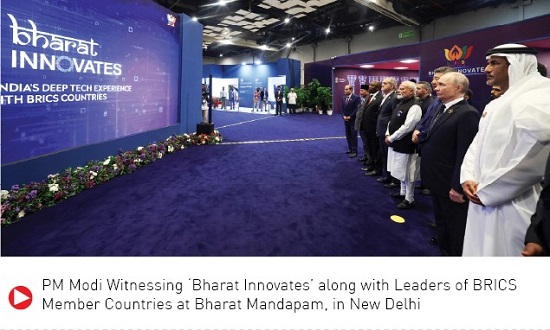
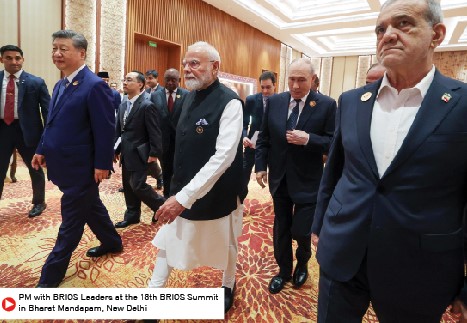
The 18th BRICS Summit, hosted by India in New Delhi on September 12–13, 2026, provides an important moment to examine that question. The grouping now consists of 11 members—Brazil, Russia, India, China, South Africa, Egypt, Ethiopia, Iran, the United Arab Emirates, Indonesia and Saudi Arabia—and according to the Indian government, these countries collectively account for around 49.5 per cent of the world's population, 40 per cent of global GDP and 26 per cent of global trade. These figures do not automatically make BRICS a coherent geopolitical bloc, but they demonstrate why its evolution can no longer be treated as peripheral to the international system.
The central development is not simply expansion. It is the ambition to create greater agency for emerging and developing economies in institutions that have historically been dominated by the established powers. The New Delhi Declaration explicitly calls for a more representative, fairer international order and reform of the multilateral system. It also commits BRICS to strengthening cooperation across political and security, economic and financial, and cultural and people-to-people dimensions. The language is significant. BRICS is no longer presenting itself merely as a consultation mechanism among emerging economies. It is positioning itself as one of the platforms through which the Global South can articulate its interests.
Yet the phrase “new global order” needs to be handled carefully. BRICS is not a military alliance like NATO. It does not have a common foreign policy, common currency, unified security doctrine or a supranational authority. Its members have sharply different political systems, economic models and strategic interests. India and China, for instance, remain competitors even while participating in the same grouping. Russia and several other BRICS members have very different relationships with Western countries. The grouping therefore cannot be understood as a conventional bloc. Its significance lies precisely in something more complicated: the possibility of creating multiple centres of influence inside an increasingly multipolar international system.
The Global South Finds a Larger Voice
For decades, developing countries have complained that their economic weight and demographic importance are inadequately reflected in institutions such as the International Monetary Fund, World Bank and United Nations Security Council. Reform of these institutions has therefore remained a recurring BRICS demand. The 2025 Rio Declaration and the 2026 New Delhi Declaration both place reform of global governance and strengthening multilateralism at the centre of the group's agenda.
This is perhaps BRICS' most consequential political dimension. Its members are not necessarily seeking to abolish the existing international system. Rather, they are demanding a greater role in determining its rules. That distinction matters. A reformed multilateral system in which emerging economies have greater representation would be different from an attempt to construct an entirely separate international system.
India has repeatedly articulated this distinction. During its 2026 presidency, New Delhi presented BRICS as a constructive platform that should complement the wider multilateral system rather than replace it. The emphasis was on practical cooperation, development and a greater voice for emerging economies.
The expansion of BRICS makes this argument more powerful. Indonesia joined as a full member in 2025, while several other countries became partner countries. The result is a grouping whose geographic footprint stretches across Asia, Africa, the Middle East and Latin America. This is no longer simply an association of the original BRICS five. It increasingly resembles a platform around which a wider coalition of emerging economies can coordinate.
The Financial Question: Can BRICS Reduce Dependence?
If BRICS is to influence the global order beyond declarations, finance will be one of the decisive tests.
The international financial system remains heavily dependent on institutions, currencies and payment networks developed largely under Western leadership. BRICS countries have consequently explored greater use of national currencies in trade, cross-border payment mechanisms and financial cooperation. But here again, the reality is more complicated than some of the louder political rhetoric suggests.
The 2026 New Delhi Declaration does not announce a BRICS common currency. Instead, it records continued technical work on cross-border payment interoperability, trade settlements and investment using local currencies. The declaration specifically acknowledges that there is “no one-size-fits-all approach.” This is an important qualification. Creating a common currency among economies as different as India, China, Brazil, Russia, Saudi Arabia and South Africa would involve enormous monetary, financial and political challenges.
What is more realistic is gradual diversification. If companies can settle increasing portions of their trade directly in national currencies, and if payment systems become interoperable, the dependence on a single currency or financial channel can be reduced at the margins.
The New Development Bank is another important component of this architecture. Created by the original BRICS members, the bank was designed to finance infrastructure and sustainable-development projects in emerging economies and developing countries. In 2026, the NDB continued to expand its role, while the BRICS-NDB Knowledge Portal was launched under India's chairship to facilitate knowledge-sharing and South-South cooperation.
This is where the phrase “alternative architecture” becomes more meaningful than “alternative world order.” BRICS is gradually developing institutions and mechanisms that can give developing countries additional choices.
De-Dollarisation or Diversification?
The debate over the dollar often gets reduced to a simplistic question: will BRICS replace the US dollar? The evidence does not justify such a sweeping conclusion.
The more immediate development is diversification rather than replacement. BRICS countries are exploring ways to conduct more trade in local currencies and improve payment connectivity. The 2026 declaration confirms continued work in precisely these areas.
The distinction is important because the dollar's global role rests on much more than political influence. It is supported by deep financial markets, liquidity, international contracts, reserve holdings and a large global financial ecosystem. Replacing such a system would require an alternative of comparable scale and credibility.
But that does not mean diversification is insignificant. Even a gradual reduction in dependence on a single payment architecture can alter bargaining power. If countries have more options for settling trade, financing development and accessing liquidity, economic sovereignty increases.
For many countries of the Global South, that is the attraction of BRICS—not necessarily abandoning Western institutions, but having additional doors to knock on.
Trade and the Battle Over Economic Rules
The trade dimension may ultimately prove even more consequential than the currency debate.
The New Delhi Declaration expresses concern about unilateral tariff and non-tariff measures and calls for a stronger and more responsive World Trade Organization. It also argues that emerging and developing economies need greater consideration in the global trading system.
This comes at a time when globalisation itself is changing. Supply chains are being reorganised around geopolitical considerations. Industrial policy, tariffs, export controls, technology restrictions and strategic dependencies have become increasingly important.
BRICS offers its members a forum to discuss these challenges collectively. Yet its internal diversity also creates complications. China is a manufacturing powerhouse; India is seeking to expand manufacturing and digital services; Gulf members are major energy exporters and investors; Brazil is a major agricultural producer; Russia remains a major energy and commodities power; African members have different development requirements.
Their interests will not always coincide. The challenge for BRICS is therefore to convert diversity from an obstacle into an advantage.
Energy, Food and Strategic Resources
The changing composition of BRICS also gives the grouping enormous relevance in energy and commodities.
With major oil and gas producers among its members, BRICS encompasses a significant portion of global energy production and consumption. It also includes major agricultural producers and countries with critical minerals and strategic resources.
This creates possibilities for cooperation in energy security, food security, fertilisers, supply chains and infrastructure. But it also creates strategic interdependence. Countries that are competitors in one field can be partners in another.
India's approach has traditionally reflected this pragmatic principle: strategic autonomy does not mean choosing one camp; it means retaining the ability to work with multiple centres of power according to national interests. BRICS fits naturally into that framework.
Technology May Be the Real Battleground
Perhaps the most underestimated dimension of the emerging BRICS architecture is technology.
The 2026 New Delhi Declaration devotes substantial attention to artificial intelligence, digital transformation, cybersecurity, fintech and emerging technologies. BRICS members committed themselves to cooperation on AI governance, with particular emphasis on accessibility, safety, inclusiveness and the needs of the Global South.
This could become one of the most important areas of future cooperation.
The next phase of global power will not be determined only by aircraft carriers and foreign-exchange reserves. It will also be determined by who controls computing capacity, semiconductor supply chains, data, artificial intelligence, digital payment systems, telecommunications and advanced manufacturing.
For developing countries, the danger is that the digital divide could become the new version of the old development divide. If AI infrastructure and advanced technologies remain concentrated in a handful of countries, much of the Global South could become consumers rather than creators.
BRICS' emphasis on technology cooperation therefore has strategic significance. It could help members share expertise, develop common standards and create pathways for technological capacity-building.
Climate and Development: The Other Global South Argument
Climate change adds another dimension to the BRICS debate.
Developing economies argue that climate policy cannot be separated from development, poverty reduction and access to finance. The 2026 declaration highlights the disproportionate climate vulnerabilities faced by emerging and developing economies and calls for greater financing for adaptation and sustainable development. It also stresses the principle of common but differentiated responsibilities under the UN climate framework.
This is not merely environmental diplomacy. It is an argument about who pays for the transition to a low-carbon economy.
For India, Brazil, African economies and other developing countries, the central question is how to expand energy access and economic opportunity while dealing with climate risks. BRICS can provide a collective negotiating platform on climate finance, carbon markets and technology transfer.
The same applies to food and health security. The New Delhi Declaration expands cooperation in digital health, vaccines, medical production, public-health capacity and research. In other words, BRICS is moving beyond traditional geopolitics into the everyday development concerns of its populations.
Security and the Politics of Strategic Autonomy
BRICS was not created as a security alliance, but geopolitics inevitably enters its discussions.
The 2026 declaration addresses terrorism, conflicts, nuclear risks, peacekeeping and international security. It specifically condemns the April 2025 terrorist attack in Jammu and Kashmir and calls for stronger international cooperation against terrorism, including terrorism financing and cross-border movement of terrorists.
At the same time, BRICS members do not share identical positions on every conflict. This is one of the reasons the grouping's future will depend heavily on consensus-building.
India's presence is particularly significant here. New Delhi has long argued for strategic autonomy and a multipolar world in which countries retain freedom of action. BRICS allows India to engage simultaneously with Russia, China, the Gulf, Africa and Latin America, while India also maintains deep relationships with the United States, Europe, Japan and other partners through different platforms.
This is not contradiction. It is the essence of multipolar diplomacy.
The China Question
No serious analysis of BRICS can avoid China.
China is the largest economy within BRICS and a major driver of intra-group trade and investment. Its economic weight gives it enormous influence. At the same time, India and China have unresolved strategic and border issues.
This creates a fundamental tension. Can BRICS become an effective platform for the Global South without becoming identified primarily with Chinese strategic ambitions?
India's answer appears to be an attempt to preserve BRICS as an inclusive, development-oriented and consensus-based platform. The New Delhi Declaration emphasises sovereign equality, mutual respect, openness, inclusiveness and consensus.
Whether this model can survive the group's growing size and internal disagreements remains an open question.
Expansion: Strength or Weakness?
Expansion is BRICS' greatest opportunity and perhaps its greatest institutional challenge.
More members mean greater economic and demographic weight. But more members also mean more competing interests. Analysts have identified the tension between expansion and institutional coherence as one of the central challenges facing the grouping.
If BRICS becomes too broad without developing effective mechanisms for decision-making, it risks becoming another large diplomatic forum that produces impressive declarations but limited implementation.
If, however, it can build practical institutions around payments, development finance, technology, health, climate and trade, expansion could become a source of strength.
The difference will be determined not by the number of flags around the summit table, but by what happens between summits.
So, Is a New Global Order Emerging?
The answer depends on what is meant by “new global order.”
If the phrase means that BRICS is about to replace the United States and Western institutions, the evidence does not support such a conclusion. BRICS has neither the institutional cohesion nor the common strategic purpose required for such a transformation.
But if a new global order means a world in which power is distributed among several centres rather than concentrated predominantly in one, then BRICS is clearly part of that transition.
Its importance lies in accumulation. A development bank here. Local-currency settlements there. Greater representation in global institutions. New technology partnerships. Expanded South-South trade. Cooperation in health and climate. Greater coordination among major emerging economies. None of these developments alone overturns the international system. Together, however, they can gradually change its balance.
That may be the real story of BRICS 2026.
The world is not necessarily moving from one order to another overnight. It is becoming more plural, more contested and more institutionally diverse. The old architecture is still powerful, but it is no longer the only architecture being built.
India's role in this transformation is particularly important. As host and chair in 2026, New Delhi has sought to frame BRICS not as an anti-Western project but as a platform for resilience, innovation, sustainability and a stronger voice for emerging economies. The summit brought together more than 400 meetings and engagements across 30 Indian cities during India's chairship, illustrating an effort to turn BRICS from an annual leaders' meeting into a broader institutional network.
The ultimate test, therefore, is not whether BRICS can issue another declaration about a fairer world. It is whether its members can build mechanisms capable of delivering one.
A genuine shift in the global order does not happen because leaders announce it from a podium. It happens when trade routes change, financial systems diversify, technologies spread, development institutions gain credibility, developing countries acquire greater bargaining power and international rules begin reflecting a wider distribution of economic and political weight.
BRICS 2026 may not mark the birth of a completely new world order. It may, however, represent something more consequential in the long run: the consolidation of the foundations of a multipolar one.
The question now is no longer whether the Global South wants a greater voice. The question is whether BRICS can turn that demand into durable institutions, practical cooperation and genuine influence. The answer will determine whether BRICS remains an ambitious diplomatic forum—or becomes one of the principal building blocks of the international system that follows.
(The content of this article reflects the views of writer and contributor, not necessarily those of the publisher and editor. All disputes are subject to the exclusive jurisdiction of competent courts and forums in Delhi/New Delhi only)





















Leave Your Comment