


The state of Bihar played a significant role in earlier Indian history. It served as both the imperial powers’ headquarters for many years as well as main hub of Indian culture and civilization. For thousands of years, this region served as the capital of several powerful kingdoms and the primary centre of learning. Two major pacifist religions Buddhism and Jainism arose in 6th century BCE from this region. In 1912, Bihar was carved out as a separate province in the British India Empire. Since 1947, Bihar has been the original state of the Indian Union. Sri Krishna Sinha was the first Chief Minister of the state and continued up to 1961. He was a man of unimpeachable integrity, great public spirit and Gandhian nationalist. It was rated as the best administered state in the country at that time. After him the caste sections were formed in Congress and accordingly Binodanand Jha succeeded S K Sinha. After Indira Gandhi became the Prime Minister, the Chief Ministers of Bihar were selected by her and not by the elected MLAs. This brought an end to indigenous work-oriented mass leaders.
Indira Gandhi succeeded Lal Bahadur Shastri in 1967 and up to 1971, she obtained near absolute control over the government and the Congress party, as well as a huge majority in the Parliament. The central government powers were concentrated within the PM’s secretariate, rather than the cabinet. The Congress party was split in 1969 into Congress (O), comprising of old leaders and Congress (R) which later became Congress(I), Indira Congress. In 1971 elections, the Congress(I) won with huge majority. Indira’s ascent was backed by her charismatic appeal among the masses. She nationalised the banks in 1969, abolished privy purse (payment made to the families of erstwhile princely states) and created Bangladesh in 1971 war with Pakistan.
In 1971 elections, Indira Gandhi defeated Raj Narain from Raebareli constituency. He lodged a case of election fraud and use of state machinery against her in the Allahabad High Court. Shanti Bhushan fought for Raj Narain and Nani Palkiwala for Indira Gandhi. In 1975, the High Court found Indira Gandhi guilty and declared her election null and void. She was unseated from the Lok Sabha and barred to contest election for six years. The Supreme Court upheld the decision of High Court; however, she was allowed to continue as the Prime Minister pending the resolution of her appeal. On 25th June 1975, President Fakhruddin Ali Ahmad, declared the state of internal emergency on the advice of the Prime Minister. The leaders of the opposition parties were arrested, media was controlled and MISA (maintenance of internal security act) was implemented. The emergency in the country is known as the worst decision taken by any Prime Minister.
JP movement was a political movement initiated by the students of Bihar against the misrule and corruption in the state government led by Abdul Gafoor in 1974. It was led by the veteran Gandhian socialist leader Jai Prakash Narain. It was also referred to as Sampoorna Kranti (total revolution). The Janata Party was formed as an amalgam of political parties opposed to the emergency imposed by Indira Gandhi. It was founded by Jai Prakash Narain by merging Janata Morcha, Bhartiya Jana Sangh, Bhartiya Lok Dal, Congress(O), Congress for Democracy etc. with the slogan ‘Janata Se Janta Ke Liye.’ The emergency was lifted in 1977 and elections were held. The Janata Party won the elections with sweeping majority and the first non-Congress government led by Morarji Desai was formed in 1977. Desai resigned and Charan Singh became the Prime Minister with the support of Indira Gandhi. He appointed the Mandal commission to recommend the caste quotas. Charan Singh is the only Prime Minister to demit office without facing the Parliament even once and systematically sowed the seeds of virulent caste polarisation of politics. Indira Gandhi withdrew the support and the government collapsed (due to internal differences), forcing midterm elections. She returned to power in 1980 and sidelined the Mandal Report.
Karpoori Thakur, popularly known as Jan Nayak, became the Janata Party Chief Minister of Bihar in 1977. Known as the champion of the poor, he introduced 26% reservation policy in education and employment in the state. He was posthumously awarded the Bharat Ratna by the government of India on his 100th birth anniversary. From 1980 to 1990 the state had Congress governments.
Following the 1980 defeat in the elections, the Janata Party began to disintegrate and the new political parties like Bhartiya Janata Party (BJP), Janta Dal (United) (JDU), Biju Janata Dal (BJD), Janta Dal (Secular) (JDS), Rastriya Janata Dal (RJD) and others were formed.
In Bihar, Lalu Prasad Yadav from Janta Dal became the Chief Minister in 1990 and continued up to 1997. His policies were based on populism and caste divisions. Fodder scam was unearthed in which Lalu was charge sheeted, convicted, and finally jailed. In 1997, Lalu parted ways with Janta Dal and formed Rastriya Janta Dal. He resigned and the same day his wife Rabri Devi was sworn in as the new Chief Minister of the state. She continued as CM until 2005 (Nitish Kumar was CM for 7 days in 2000). 1990 to 2005 is considered as the worst period of Bihar, popularly described as Jungle Raj. Education and economy were crippled, corruption was at its peak and there was no law and order in the state.
In 2005, Nitish Kumar headed the coalition government of JDU and BJP, he continued in the office up to 2013 and Bihar started showing improvement, but he switched over to UPA and formed coalition with RJD and Congress. In 2014, he was succeeded by Jitan Ram Manjhi and he again became the CM the next year. In 2017, he broke with RJD over corruption allegations and returned to NDA heading coalition with the BJP. In 2022, he rejoined the UPA and remained the CM and again joined hands with the BJP in January 2024. Nitish Kumar has become the longest serving Chief Minister of Bihar, but has changed sides many times and is known as 'Paltu Ram'. Now the beginning of his end has started.
Nitish Kumar’s latest volte-face may have exposed him to a fresh wave of criticism over his string of flip flops, but has certainly improved the BJP’s prospects in the coming Lok Sabha polls. He is an honest politician with no corruption charge against him but that is not enough. A leader is always evaluated based on his performance. Bihar continues to be a sick state despite having fertile land and mineral reserves. The state sends a large number of civil servants through UPSC. Due to corrupt political system, the state has not progressed significantly. Industries are not coming to the state because of poor law and order and lack of infrastructure.
On the national front, 28 opposition parties formed India National Developmental Inclusive Alliance (INDI Alliance) and held its first meeting in Patna on 23rd June 2023. It was an initiative of Nitish Kumar to unite the opposition parties. He felt totally ignored and sidelined in the alliance. The next four more meetings ended without any outcome, and eventually he joined the NDA. The aim of INDI Alliance is to put together a single front to take on the NDA. The most complex issue is of seat sharing. The difficult states to predict are Kerala, where the CPM and Congress have bitter history of conflict; Punjab, where the AAP and Congress are two strong opposing parties; in West Bengal, where TMC and Congress are vying for influence and in Bihar, Nitish Kumar’s joining hands with NDA has left no hope for this alliance.
India has seen several political upheavals throughout its 77 years history. After the 1975 emergency the opposition parties came together and defeated Indira led Congress. The new government was formed but could not complete the term because of infighting. The country also has seen the unstable governments of 1990s. The people would not like to have such governments in the future. The INDI alliance seems to be without any vision. They have not been able to work out any common minimum programme which they will implement, if voted to power. They have only one point programme to remove Modi. They do not have any popular leader to match the stature of Modi. People are unlikely to believe such alliance of ideological different parties. which is full of contradictions.
India needs stable government at the centre with a visionary leader. Strong opposition is required for a vibrant democracy. INC, the oldest political party of the country has seen many splits in the past and lost popular leaders like Sharad Pawar, Mamta Bannerji, Jaganmohan Reddy etc. It needs to learn lessons from the past and reinvent itself but unfortunately, they are busy in promoting Rahul Gandhi and not the party. In the prevailing situation, BJP led NDA appears poised to form the next government.
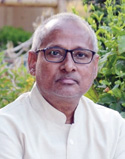
By Manoj Dubey
Principal (Retd.)
Delhi Public Schools
(The content of this article reflects the views of writers and contributors, not necessarily those of the publisher and editor. All disputes are subject to the exclusive jurisdiction of competent courts and forums in Delhi/New Delhi only)



















Comments (2)
S
Very Good analysis
S
Detailed information on politics in Bihar , nice article