



Rakesh Kumar
Extracting meaningful outcomes from international organizations such as the United Nations has often proved to be an arduous task. The very emergence of alternative forums like the Non-Aligned Movement (NAM) and more recently, BRICS, reflects a widespread perception that existing global institutions have been unable to adequately address the aspirations and concerns of large sections of the world. Before analysing the outcome of the recently held BRICS New Delhi meet let’s have a look at the performance of UNO.
The United Nations was created with the noble objective of maintaining international peace and security. Yet, despite decades of effort, wars continue to erupt, conflicts remain unresolved, and the global arms trade continues to flourish. The organization frequently finds itself attempting to preserve peace without possessing sufficient authority to prevent the creation, export, or deployment of increasingly lethal weapons.
Critics also point to a deeper structural contradiction. Several of the most influential members of the UN Security Council are nations whose historical rise to power was closely linked to colonial expansion and the exploitation of weaker societies. The political and economic scars of colonialism remain visible across large parts of Africa, where poverty, instability, and underdevelopment continue to pose significant challenges.
Many observers further argue that contemporary geopolitical crises, including conflicts involving Ukraine and tensions surrounding Iran, cannot be fully understood without examining the strategic rivalries and power politics of major global powers. From this perspective, the same nations that dominate international institutions are often accused of shaping global events in ways that serve their own interests, while expecting others to bear the consequences.
Whether one agrees with these criticisms or not, they highlight an uncomfortable reality: international institutions can only be as effective as the political will of their most powerful members. Until global governance becomes more representative, accountable, and capable of enforcing its own principles, the search for alternative platforms and alliances is likely to continue.
India's Idealism and the Price of Trust.
Despite centuries of foreign invasions and exploitation, independent India chose not the path of revenge or isolation, but that of global cooperation and peace. It invested significant diplomatic capital in building a more harmonious world order through initiatives such as Panchsheel, the Non-Aligned Movement (NAM), and active participation in the United Nations and other international forums.
India did not merely preach peace; it contributed to it. Indian soldiers have served with distinction in UN peacekeeping missions across the globe, often in some of the world's most troubled regions. Few nations have demonstrated such consistent commitment to international stability and collective security.
Yet India's own security experience tells a more sobering story. Despite its faith in international institutions and peaceful coexistence, the country faced military conflicts and invasions in 1947–48, 1962, 1965, 1971, and 1999. Appeals to the United Nations and the broader international community often yielded limited practical support when India's security was at stake.
For decades, India also endured cross-border terrorism and proxy warfare from hostile elements in its neighbourhood. While these challenges imposed enormous human and economic costs, global responses were frequently slow, selective, or constrained by geopolitical considerations.
The lesson learnt is that being good alone is not sufficient, the country needs a strong economy and empowered human capital to lead the world.
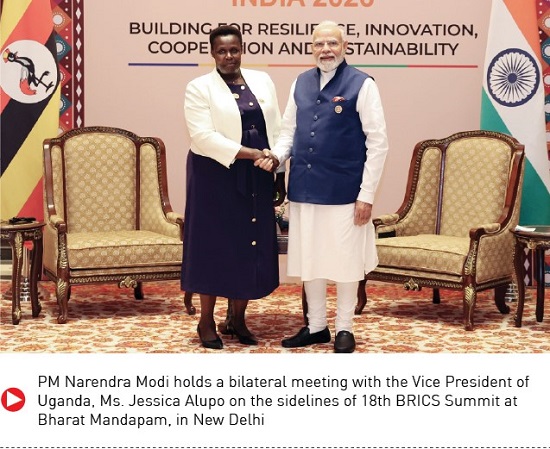
BRICS and its relevance.
BRICS can make a difference if it follows principles of natural justice and protecting the weak.
The expansion of BRICS—adding members like Egypt, Ethiopia, Iran, Saudi Arabia, the UAE, and Indonesia—has dramatically increased the bloc's demographic and economic weight, but it has also multiplied its internal contradictions.
What guides Indian strategy at BRICS.
India no longer seeks to isolate China, but neither is it willing to accept Chinese leadership of Asia or BRICS. New Delhi's strategy appears to be
1. Engage China Where Interests Converge
Assessment: Largely Successful
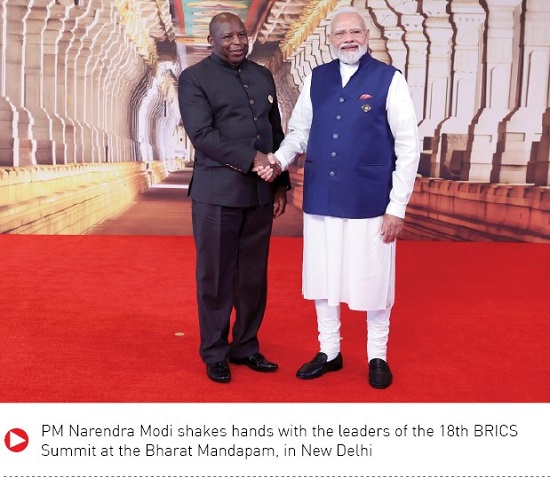
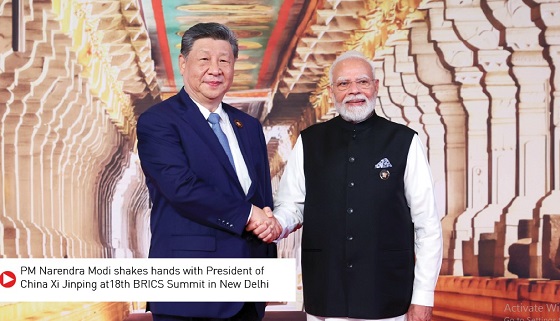
India managed to keep BRICS focused on areas where both countries share interests: reform of global institutions, greater voice for emerging economies, trade facilitation, development finance, AI governance, and local-currency settlements. The summit also provided a platform for continued India-China dialogue after years of border tensions.
An important achievement was India's ability to obtain consensus among a highly diverse group of countries despite deep geopolitical differences. This demonstrated that India is willing to work with China when objectives overlap, without allowing bilateral disputes to dominate the forum.
2. Compete Where Interests Diverge
Assessment: Moderately Successful
The most important test was whether India could resist initiatives that would excessively increase China's institutional leverage. India resisted adoption of China's mBridge payment architecture and instead supported interoperable systems that would not place financial infrastructure under the influence of any single member.
Similarly, India ensured that BRICS discussions emphasized practical economic cooperation rather than becoming an ideological platform directed against the West. This reflects India's preference for strategic autonomy rather than alignment with any bloc.
However, China's economic weight remains unmatched within BRICS. India prevented greater Chinese dominance but could not fundamentally alter the balance of economic power.
3. Prevent BRICS from Becoming a China-Centric Institution
Assessment: India's Biggest Achievement.
The summit's major outcomes reflected several Indian proposals, including digital public infrastructure cooperation, the BRICS Risk Lab at GIFT City, industrial competency initiatives, health cooperation, and implementation mechanisms for future BRICS work.
Instead of allowing BRICS to revolve around Chinese strategic priorities alone, India broadened the agenda to include development, technology, health, resilience, and institutional reform. The resulting declaration was a compromise document rather than a China-led manifesto.
India secured a consensus declaration among 11 members with differing interests further reinforcing its role as a balancing power.
4. Strengthen India's Leadership of the Global South
Assessment: Highly Successful
India emerged from the summit as a credible convener of developing nations. The New Delhi Declaration emphasized reform of global institutions, development financing, technology access, health security, and greater representation for emerging economies—issues central to India's Global South narrative.
India's ability to host leaders from an expanded BRICS and secure agreement on a broad agenda enhanced its diplomatic standing. Even critics acknowledged that the summit strengthened India's image as a leading voice of emerging economies.
5. Maintain Parallel Partnerships with the US, Europe, Japan, and the Quad
Assessment: Successful
The summit declaration avoided transforming BRICS into a military or anti-Western alliance. India maintained cooperation with BRICS while preserving its relationships with the Quad, Europe, Japan, and the United States. This balancing act remains one of India's greatest diplomatic strengths.
The New Delhi Summit demonstrated that India has evolved from being merely a member of BRICS into one of its principal architects. China remains the bloc's largest economic power, but India showed that leadership in the twenty-first century is not determined by economic size alone. It is also determined by the ability to build consensus, shape agendas, and bridge competing interests.
India did not reduce China's influence within BRICS. What it achieved was arguably more important: it prevented China's influence from becoming exclusive. By engaging Beijing where interests converged and competing where they diverged, New Delhi reinforced its position as the balancing power within an increasingly complex and expanded BRICS.
From Participant to Powerhouse: India's Next BRICS Challenge
To wield greater influence in BRICS, the country faces a challenge which is not diplomatic but economical. China enjoys disproportionate influence because it contributes the largest share of trade, manufacturing capacity, investment, and technology within the grouping. Summits can enhance visibility, but influence ultimately follows national capability.
1. Accelerate Economic Growth
India's foremost priority must be to sustain high economic growth over the next two decades. A $10–15 trillion economy would carry far greater influence within BRICS than even the most sophisticated diplomacy. Economic strength drives market appeal, attracts investment, enhances technological capability, and expands financial leverage—ultimately translating into greater strategic influence.
2. Become the Manufacturing Alternative
India needs to become a major manufacturing hub in electronics, renewable energy equipment, semiconductors, pharmaceuticals, defence production, and machinery. Countries that depend on Indian supply chains will support Indian initiatives more readily.
3. Increase Trade With BRICS Members
India's trade with many BRICS countries remains below potential. Greater connectivity with Brazil, South Africa, Egypt, UAE, Indonesia, and Ethiopia would create constituencies that benefit from closer ties with India. Economic interdependence often translates into diplomatic influence.
4. Lead Through world class Technology
India's digital public infrastructure—UPI, Aadhaar, DigiLocker, and related platforms—has already attracted international interest. By helping BRICS nations adopt affordable digital governance systems, India can create influence through public goods rather than through financial dominance. The New Delhi summit's emphasis on digital infrastructure reflects this opportunity.
5. Strengthen Higher Education and Research
Universities, research laboratories, patents, and technological innovation has played an important role in the growth of China. India needs world-class universities, larger R&D spending, and stronger industry-academia collaboration if it wants to shape future BRICS agendas in AI, biotechnology, clean energy, and advanced manufacturing.
6. Expand Development Finance
China's influence often stems from its ability to finance infrastructure projects abroad. India cannot match Chinese financial resources immediately, but it can gradually expand development assistance, lines of credit, and technical cooperation in countries where it has a strong cultural or political similarities.
7. Reform Governance at Home
Foreign investors and global businesses closely watch contract enforcement, judicial efficiency, and regulatory stability. Ease of doing business has improved initially. Faster decision-making and predictable policies would strengthen India's economic position and, by extension, its BRICS influence.
8. Building a Global South Coalition
India's greatest comparative advantage is credibility among developing nations. Rather than competing with China everywhere, India can position itself as the bridge between developed and developing worlds, championing reforms in global governance, food security, health, and technology access. The New Delhi summit demonstrated India's ability to convene diverse countries and achieve consensus.
9. Invest in Human Capital
No country becomes a long-term leader without investing in its people. Universal quality schooling, employable skills, public health, and women's workforce participation are not merely social goals—they are strategic assets. A nation with a skilled and productive workforce has greater economic and diplomatic leverage.
10. Convert Demographics Into Productivity
India's demographic advantage is often celebrated, but demographics alone do not create influence. Jobs, skills, entrepreneurship, and productivity do. If India succeeds in creating productive employment for its young population, its influence within BRICS will rise naturally.
Conclusion.
India does not need to "out-China" for being influential in BRICS. It needs to become indispensable. China's influence comes largely from its economic power. India's future influence is likely to come from a combination of economic growth, democratic legitimacy, technological innovation, skilled human capital, and its ability to represent the aspirations of the Global South. When member countries see India as essential to their prosperity and development, influence will follow automatically. A focused approach which can restrain regionalism and confrontational politics and encourages shared vision, better centre-state cooperation can do wonders.
(The content of this article reflects the views of writer and contributor, not necessarily those of the publisher and editor. All disputes are subject to the exclusive jurisdiction of competent courts and forums in Delhi/New Delhi only)





















Leave Your Comment