


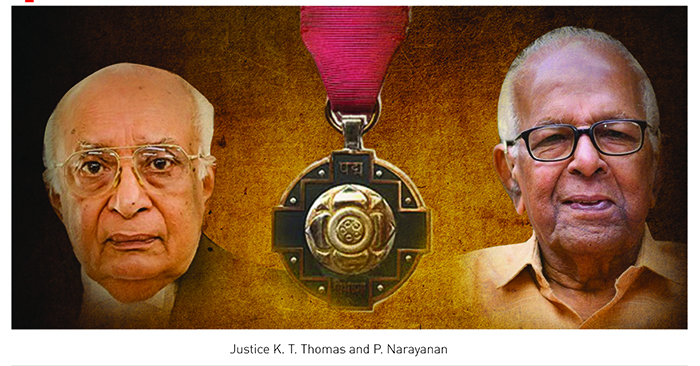
When the Government of India announced the Padma Awards for 2026, Kerala’s cultural and civic landscape found ample reason to celebrate. The state was honoured with an exceptional distinction: three of the nation’s Padma Vibhushan awardees hailed from Kerala. Among these illustrious recipients were two towering figures whose lives and work: Justice K. T. Thomas, a jurist whose courtroom pronouncements and public interventions have repeatedly stirred national debate, and P. Narayanan, a veteran journalist and editor whose steady presence in Malayalam public life has shaped generations of readers and opinion-makers.
Both men represent distinct forms of public service — one through the law’s bench and the other through the printed word — yet their careers are threaded by a common commitment to shaping public discourse and defending institutions that matter to civil society. The Padma Vibhushan recognises not only achievement but sustained public engagement; in that sense, the honours to Justice Thomas and P. Narayanan are acknowledgements of two parallel lifelines of Kerala’s modern intellectual history.
In a period marked by rapid change and evolving public discourse, Kerala’s choice of these two recipients is significant. Justice K. T. Thomas embodies the voice of a judiciary that rarely shrinks from expressing views on the social questions of the day; his judgments and public pronouncements have often moved beyond the narrow confines of legal terminology into the moral vocabulary of the nation. P. Narayanan, meanwhile, is the embodiment of regional journalism’s capacity to inform, educate and mobilise public opinion — a reminder that newspapers remain a crucial civic scaffold even as media ecosystems diversify. Awarding them the Padma Vibhushan in the same year signals a tribute to institutional guardianship — one legal, one journalistic — both essential for a functioning democracy.
Kallupurackal Thomas Thomas — better known to the bar and public as Justice K. T. Thomas — has had a judicial career marked by intellectual rigour and public candour. Born in Kottayam in 1937, Thomas entered the law in 1960 and climbed the judicial ladder through years in the district judiciary, the Kerala High Court and ultimately the Supreme Court of India, where he served from 1996 until his retirement in 2002. His judicial record encompasses major criminal and constitutional cases; yet it is his willingness, post-retirement, to speak on issues of constitutional importance and civic life that made him a familiar and sometimes controversial public figure.
Justice Thomas’s legal philosophy is notable for its stress on the moral responsibilities of the judiciary. He believed courts must be instruments not only of legal correctness but also of social conscience. Throughout his career, he took stands that reflected an attempt to balance textual law with humane consideration — whether in high-profile criminal cases or in debates on institutional accountability. His voice has been one that often insisted on restraint where the state’s power is at stake and on compassion where punishment is irreversible. Such positions have attracted both praise and sharp criticism, but they have never been indifferent.
Among the more publicised moments in Justice Thomas’s career was his role on benches handling sensitive criminal appeals and his views on capital punishment. He also participated in decision-making around matters that touch federal relationships, such as the controversies surrounding the Mullaperiyar dam — positions that in Kerala’s politically charged environment drew intense public scrutiny. Beyond the bench, Justice Thomas’s speeches and op-eds have ranged across issues: judicial reform, secularism, and the relationship between law and politics. His combination of judicial gravitas and public commentary has positioned him uniquely as both an arbiter of law and a public intellectual.
Justice Thomas’s autobiography, Honeybees of Solomon, and its Malayalam edition showcase a jurist reflective about the role of law in Indian society. His mentoring of younger jurists and occasional forays into public debates on legal reform have left a mark on both Kerala’s and India’s legal conversations. The Padma Vibhushan recognises not just a jurist’s decisions but the wider influence of a lifetime of legal engagement on public life.
P. Narayanan’s trajectory is anchored in Malayalam journalism’s post-Independence growth. A veteran of Janmabhumi and other publications, Narayanan is widely regarded as a stabilising presence in regional media — an editor and writer who combined a unique cultural outlook with a discipline for reporting and editorial stewardship. Over decades, Narayanan wore many hats: columnist, editor, translator and institution-builder, shaping a readership that trusted his judgement and editorial sense. His Padma Vibhushan is recognition of a life spent in the craft of public communication.
In Kerala’s rich media ecology, editors do more than curate news; they interpret identity, culture and public memory. P. Narayanan’s long association with Janmabhumi and other platforms positioned him to influence debates on language, regional identity, and public policy. He also contributed to Malayalam letters through translations — bringing works from other languages into Malayalam, widening the literary and intellectual horizons of his readers. This role as cultural custodian — an editor who preserves, explains and sometimes contests — is a quiet but powerful form of public service.
Narayanan’s career spans decades of political churn, technological disruption and shifting media economics. Through all this, he maintained editorial continuity: emphasis on factual reportage, disciplined editorial standards, and a firm editorial voice. For many readers, his byline or editorial stamp was synonymous with reliability. In an age when the proliferation of platforms sometimes dilutes trust, such steadiness becomes a public good. The Padma Vibhushan in his name thus recognises journalism not merely as a profession but as civic stewardship.
On paper, the professions of the two awardees could not be more different: one wore the robed mantle of impartial adjudicator, the other the newsroom coat of editorial leadership. But both converged on the same civic terrain: they safeguarded — in their own ways — the public sphere.
Justice K. T. Thomas operated within the architecture of law. His rulings, dissents, and public utterances have had direct legal consequences and helped shape jurisprudence on matters ranging from criminal justice to federal disputes. The bench’s authority is formal and binding; when a judge of status like Thomas speaks, it often alters legal expectations and institutional behaviour.
P. Narayanan worked in the flow of public opinion. Editors and journalists do not issue binding orders; they influence thought, priorities and public memory. Narayanan’s editorials, translations and institutional leadership helped set public agendas in Kerala — from debates on education and language to coverage of social movements. The newsroom’s sway is softer but pervasive: it shapes how citizens perceive issues and how democracies deliberate about them.
Kerala has always boasted a vibrant public sphere: active civil society, high literacy, and a media culture that prizes debate. The state’s political life is plural and often sharply contested. In such an environment, institutions — courts and newspapers among them — assume oversized importance. They are not mere instruments; they are arenas where identity, policy and law are negotiated.
Honouring a former Supreme Court judge and a veteran regional journalist in the same breath underscores the symbiotic nature of institutional health. Courts provide legal frameworks and rights; the press exposes, explains and critiques. Both are necessary for a functioning public culture that holds power to account and nourishes democratic practice. By recognising these two men, the Padma committee did more than salute individuals — it acknowledged the continuing centrality of robust institutions to Kerala’s and India’s civic life.
No public life is without controversy. Justice Thomas’s public interventions have sometimes provoked debate about the line between a retired judge’s freedom to comment and the decorum expected of members of the judiciary — questions that recur in democracies worldwide. Similarly, P. Narayanan’s long association with a particular vernacular newspaper invites reflection on the relationship between journalism and ideological persuasion. These are not reasons to diminish their achievements; rather, they are signs that both figures have mattered enough to attract scrutiny — and scrutiny is itself a part of democratic recognition.
Colleagues and contemporaries describe Justice Thomas as a jurist of deep legal memory and unafraid to voice convictions. Younger lawyers often recall his courtroom rigour and the standards he set for legal reasoning. P. Narayanan is remembered in newsrooms for his editorial discipline, his insistence on clarity, and his role in mentoring a generation of reporters and translators who broadened Malayalam journalism’s scope. These personal testimonies illuminate the less visible aspects of public service: mentorship, steadiness, and the slow daily work of upholding standards.
Awards such as the Padma Vibhushan inevitably provoke reflection on generational transmission. For young jurists, Justice Thomas’s career is a reminder that legal excellence is inseparable from the courage to address public dilemmas. For aspiring journalists, P. Narayanan’s life affirms the enduring value of editorial integrity and of treating journalism as a vocation rather than mere enterprise. In both cases, the honours may inspire renewed conversations about professional ethics, public responsibility, and the meaning of contribution beyond transactional success.
That three of the five Padma Vibhushan recipients in 2026 hail from Kerala — and that two of them occupy the twin spheres of law and media — suggests an enduring Kerala imprint on national life: a region that produces thinkers, jurists, writers and public servants whose reach extends well beyond state borders. This is a pattern grounded in the state’s educational investments and a culture that prizes debate. The recognition of Justice Thomas and P. Narayanan therefore reaffirms Kerala’s role as a crucible for public leadership.
Justice K. T. Thomas and P. Narayanan come from different professional worlds, but their lives converge on a shared lesson: public life is sustained by patient, principled labour. Whether it is through a reasoned judgment that shapes the arc of justice or an editorial that clarifies public choice, both kinds of work anchor democratic life. The Padma Vibhushan confers ceremonial honour; its deeper value lies in the stories it highlights — stories of lives spent in public service, of careers that insisted on standards, and of influence wielded with the sense that institutions matter more than personalities.
As readers of Uday India and citizens of Kerala reflect on these honours, the invitation is to consider not just the biographical facts — the dates, the posts, the awards — but the larger civic ethos these two men represent. In times when institutions are tested, their examples suggest a simple civic prescription: excellence, integrity and public-mindedness are worthy aims, and they deserve recognition. The Padma Vibhushan to Justice K. T. Thomas and P. Narayanan is, in that sense, a call to keep the institutions they represent healthy and to cultivate the next generation of citizens willing to steward them.
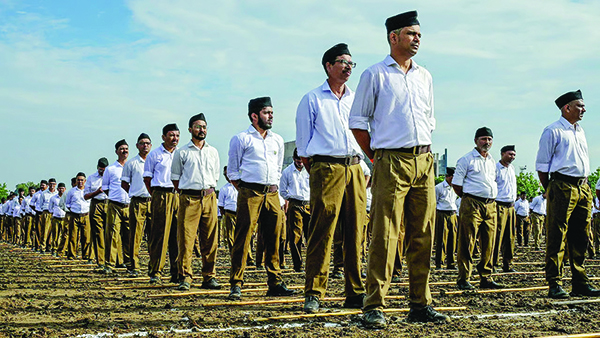
One dimension of Justice K. T. Thomas’s public life that attracted wide national attention was his forthright assessment of the Rashtriya Swayamsevak Sangh (RSS), at a time when discourse around the organisation was often polarised and reductionist. Breaking away from ideological caricatures, Justice Thomas publicly described the RSS as a disciplined organisation with a strong sense of nationalism and social commitment, while also insisting that any organisation operating in a democracy must remain within constitutional boundaries.
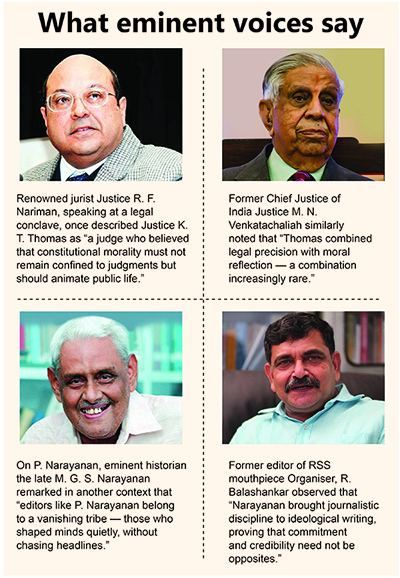
In one widely quoted remark, he observed that “criticising the RSS without understanding its structure, discipline and social work is intellectually dishonest.” Such statements, coming from a former Supreme Court judge known for his independence, generated intense debate — not because they were partisan, but because they compelled a more nuanced conversation. Senior advocate and constitutional scholar Fali S. Nariman once remarked about Justice Thomas: “He was among those judges who were never afraid to disturb comfort zones — either of the State or of the intelligentsia.” That courage to speak plainly, even after retirement, became a defining feature of his public persona.
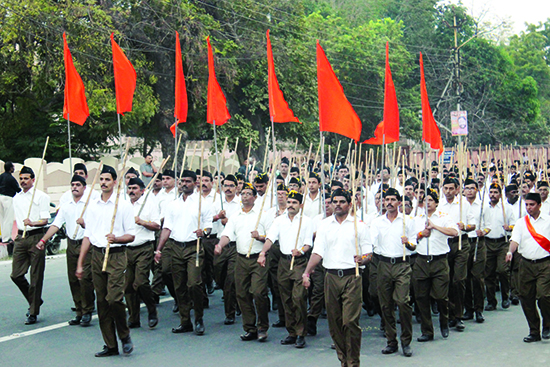
Among P. Narayanan’s most enduring intellectual contributions is his well-acclaimed book on the history of the RSS in Kerala — a work widely regarded as one of the most comprehensive and rigorously documented accounts of the or-ganisation’s growth in the state. Written with the discipline of a seasoned editor and the patience of a chronicler, the book traces the RSS’s journey through social resistance, political hostility, and cultural engagement, situating it firmly within Kerala’s unique socio-political context.
The work received praise even from those who did not necessarily share the organisation’s worldview, for its reliance on archival material, first-person testimonies, and sober narrative tone. Veteran journalist the late T. J. S. George once noted in a public discussion that “Narayanan’s strength lies in narrating ideological history without shrillness — a rare quality in contemporary political writing.” The book reinforced Narayanan’s reputation not merely as an editor, but as a serious historian of Kerala’s public movements.
Pradeep Krishnan
(The content of this article reflects the views of writer and contributor, not necessarily those of the publisher and editor. All disputes are subject to the exclusive jurisdiction of competent courts and forums in Delhi/New Delhi only)

















Leave Your Comment