


Temples have always been more than places of worship in India. They have historically functioned as hubs of economic activity, centers of education, and custodians of cultural heritage. Ancient temples like those in Madurai, Konark, and Khajuraho not only stood as architectural marvels but also served as engines of prosperity for their regions. Their influence extended to generating livelihoods, preserving traditions, and maintaining social harmony. Today, Ayodhya’s transformation with the construction of the Ram Temple stands as a testament to the enduring legacy of temples as epicenters of unity, cultural renaissance, and economic rejuvenation.
The place of temples in society is indeed pre-eminent. It played an important role in uniting people through the various ritual activities. All the social activities of villages in India centered round temple. Besides the resident of deity and place of worship, temples are the repositories of our tradition, centres of education (pathasala), charitable institutions, hospitals, centres of preservation of the fine arts and historical records, governing body of local self-government, place of entertainment, meeting place and place of Justice. The temples were also the place of peaceful assembly of the society and resting place of arts like, vastu, silpa, natya, and other similar fine arts. Temples are also responsible for the origin and growth and preservation of many traditional arts.
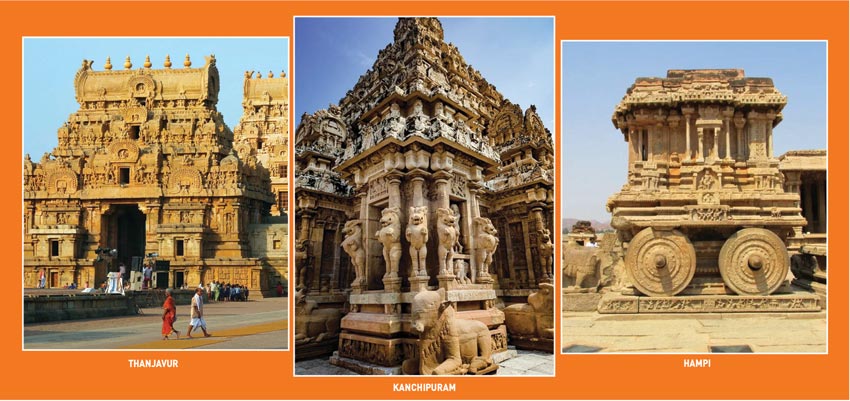
In ancient India, temples were the linchpins of societal growth. They supported art and architecture, provided education, and acted as financial institutions. Temple towns like Thanjavur, Kanchipuram, and Hampi were not just religious destinations but also thriving trade and cultural centers. The wealth generated by temples was reinvested in community development, including irrigation projects, healthcare, and education. Artisans, traders, and scholars thrived under the patronage of temples, creating a self-sustaining ecosystem that supported regional prosperity.
Fast forward to the present, Ayodhya’s resurgence as a spiritual and economic nucleus mirrors this historical pattern. The construction of the Ram Temple has reinvigorated the town, not just as a place of pilgrimage but as a hub of cultural and economic activity.
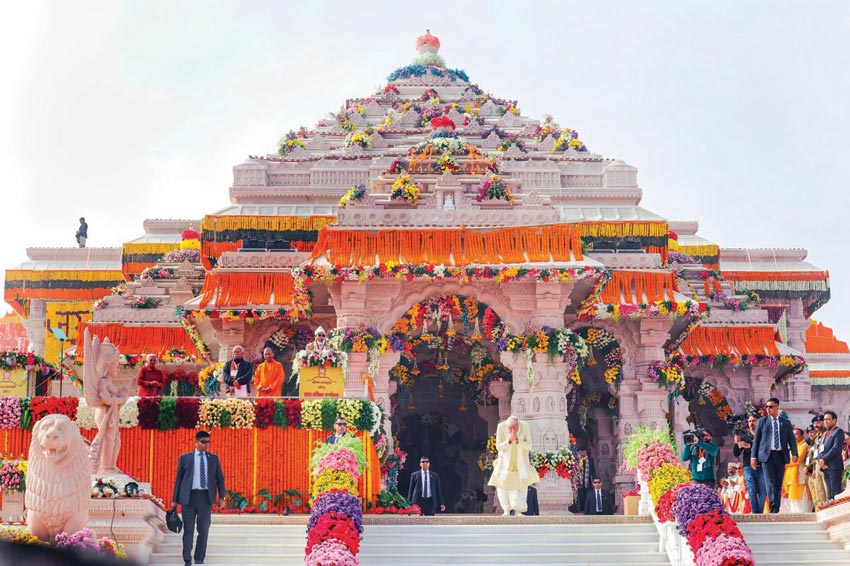
The inauguration of the Ram Mandir in Ayodhya on January 22nd, 2024, was not just a brick-and-mortar event; it was the culmination of a decades-long socio-religious saga that resonated deeply within the Indian collective consciousness. Understanding its significance requires a multi-faceted lens, encompassing elements of faith, history, politics, and social fabric.
For Hindus, Lord Rama embodies righteousness, courage, and devotion. Ayodhya, believed to be his birthplace, is a holy city, and the Ram Mandir has been a cherished dream for centuries. The temple symbolizes devotion, not just to Rama, but to the ideals he represents – integrity, duty, and justice. Its inauguration marks a physical manifestation of their spiritual yearning, offering a sacred space for prayer, contemplation, and connection with the divine.
Historical Significance:
The story of the Ram Mandir is intertwined with centuries of history, conquests, and socio-political complexities. The demolition of a Babri Masjid at the disputed site in 1992 ignited communal tensions and legal battles. The court's verdict in 2019 awarding the land to Hindus brought closure to a turbulent chapter. The temple's inauguration marked a turning point, a resolution to a historical conflict, and a potential step towards interfaith harmony.
Social Significance:
The Ram Mandir's impact extends beyond religion and politics. It offers a platform for cultural reassertion and community pride. Millions of Hindus across India see the temple as a symbol of their heritage and values. It can potentially unify diverse communities through shared devotion and cultural practices. However, it also raises concerns about potential exclusion and the need for sensitive navigation of interfaith relations.
Ayodhya’s Transformation: A Year of Remarkable Change
The past year has witnessed Ayodhya evolving into a symbol of unity and progress. The Ram Temple—a long-cherished dream of millions—has not only reignited spiritual fervor but also catalyzed significant socio-economic and cultural transformation. The following aspects illustrate the profound impact of this transformation:
1. Economic Development and Employment Generation
The construction of the Ram Temple has spurred an unprecedented wave of economic activity in Ayodhya. Thousands of jobs have been created directly through the construction process and indirectly through related industries such as tourism, hospitality, and local crafts. The influx of devotees and tourists has led to a surge in demand for accommodation, food, transportation, and souvenirs, resulting in the mushrooming of hotels, restaurants, and local businesses.
Additionally, infrastructure development in Ayodhya has seen a remarkable boost. Improved roads, enhanced connectivity, and beautification projects have not only facilitated ease of access but have also elevated Ayodhya’s standing as a global tourist destination. The Uttar Pradesh government’s investment in smart city initiatives for Ayodhya has ensured sustainable urban growth, benefiting both residents and visitors.
2. Revival of Local Arts and Crafts
The Ram Temple’s construction has revitalized traditional craftsmanship. Artisans specializing in stone carving, woodwork, and textiles have found new opportunities to showcase their skills. The demand for handcrafted souvenirs, including idols, wall hangings, and paintings, has soared, providing livelihoods to numerous families.
Local fairs and exhibitions, organized as part of the temple’s festivities, have provided a platform for artisans to reach a broader audience. This revival of traditional crafts has not only contributed to Ayodhya’s economic growth but also ensured the preservation of its rich cultural heritage.
3. Cultural Renaissance
Ayodhya’s cultural identity has been significantly enriched over the past year. The Ram Temple has become a focal point for celebrating India’s heritage, with festivals such as Diwali and Ram Navami attracting thousands of visitors. These celebrations have been grander than ever, showcasing Ayodhya’s spiritual and cultural vibrancy.
The temple has also inspired the establishment of cultural centers, museums, and research institutions dedicated to the Ramayana’s legacy. These initiatives aim to educate visitors about Lord Ram’s teachings and their relevance in contemporary times, fostering a deeper connection to India’s cultural roots.
4. Social Cohesion and Unity
The Ram Temple has emerged as a unifying symbol for people across diverse communities. It represents a shared cultural and spiritual heritage, fostering harmony and mutual respect. Pilgrims from various parts of India and abroad converge in Ayodhya, creating a melting pot of traditions and fostering a sense of national pride.
Local communities have come together to participate in the temple’s activities, reinforcing bonds of solidarity. The temple’s inclusive approach, welcoming people from all walks of life, has strengthened the social fabric of Ayodhya.
Tourism Industry Boom
Ayodhya, a city immersed in religious significance and the birthplace of Shri Ram, has long been a popular tourist destination for devotees and history enthusiasts. However, with the construction of the Shri Ram Mandir, tourism in Ayodhya was expected to witness a significant presence of both domestic and international visitors. The majestic temple, designed as per ancient scriptures and adorned with intricate carvings, undoubtedly served as a focal point for pilgrims seeking blessings.
As per a report, the tourism scenario in India before Ram Mandir was such that Kerala ranked first as its total revenue (including direct & indirect) from Tourism during 2022 was Rs.35168.42 Crore, showing an increase of 186.25 per cent over the last year’s figure. This is followed by Goa where more than 4.03 lakh tourists visit.
If you talk about religious tourism, The Golden Temple is in the top place generating 3.5 lakh devotees per year followed by Tirupati which has 2/2.5 lakh devotees per day. Vaishnodevi temple is visited by 75000 devotees per day while Varanasi gets a footfall of 60-70 thousand devotees per day.
Tourism scenario of Ayodhya post the construction of Shri Ram Mandir
Post the consecration of Ram Mandir, the number of tourists has gone up to 5 lakh per day in Ayodhya. The entire scenario of the tourism industry in Ayodhya has changed considerably as it is estimated to cross 6 trillion in the next five years. A closer look at the numbers revealed that in 2023, 6.3 per cent of total number of tourists who visited UP headed to Ayodhya. UP's tourist footfall crossed the 32 crore mark in the first nine months of 2023. Of the total, Ayodhya's contribution was 2.03 crore and this increase has been over 85 times in comparison to 2017 figures.
The construction of Ram Mandir will boom economic opportunity. The same had been considered by the government of India and has allocated INR 1 lakh crore exclusively for tourism. Before the Mandir was built, Ayodhya had only one railway train and now it has 56 trains running per day. This number will escalate to 1000 trains in the next five years. Currently the airport has 64 chartered aircraft and 35 flights taking off every day. This number is expected to go upto 3 lakh per month in the next two years.
Ayodhya has experienced a remarkable surge in tourism over the past year following the inauguration of the Ram Temple. Millions of pilgrims and tourists from across India and the world have visited the city, eager to witness the grandeur of the temple and immerse themselves in its spiritual ambiance. This influx has significantly boosted the local economy, with increased revenue for hotels, restaurants, transportation services, and souvenir shops. Tour operators and travel agencies have also flourished, offering specialized packages that highlight Ayodhya’s spiritual and cultural heritage. The city’s enhanced infrastructure, coupled with its global recognition, has positioned Ayodhya as a premier religious tourism destination.
5. Improved Quality of Life for Citizens
The transformation of Ayodhya has significantly improved the lives of its residents. The economic boom has led to higher incomes and better living standards. Enhanced infrastructure, including modern amenities and public services, has made Ayodhya a more livable city.
Education and healthcare facilities have also received a boost. New schools and hospitals have been established to cater to the growing population, ensuring access to quality education and medical care. These developments have instilled a sense of pride and optimism among Ayodhya’s citizens.
6. Environmental Sustainability
The development projects in Ayodhya have been undertaken with an emphasis on sustainability. The beautification of the Saryu River and the creation of green spaces around the temple have enhanced the city’s natural charm. Efforts to maintain cleanliness and implement eco-friendly practices have made Ayodhya a model for sustainable urban development.
Global Recognition and Future Prospects
The Ram Temple has placed Ayodhya on the global map as a must-visit spiritual destination. International tourists, scholars, and researchers are drawn to Ayodhya to explore its rich history and cultural significance. This global recognition has opened new avenues for cultural exchange and economic partnerships.
Looking ahead, Ayodhya’s potential as a hub of religious tourism is immense. The ongoing development of the Ayodhya airport and plans for high-speed rail connectivity will further enhance its accessibility. As Ayodhya continues to grow, it is poised to set an example for other cities in leveraging cultural heritage for holistic development.

By NILABH KRISHNA
(The content of this article reflects the views of writers and contributors, not necessarily those of the publisher and editor. All disputes are subject to the exclusive jurisdiction of competent courts and forums in Delhi/New Delhi only)















Leave Your Comment