


A major maritime anti-narcotics operation in the Arabian Sea has dealt a significant blow to an international drug-smuggling attempt, with the Indian Coast Guard and Gujarat Anti-Terrorism Squad seizing narcotics valued at more than ₹3,000 crore. The interception of an Iranian dhow carrying 526 kg of heroin and methamphetamine, along with the arrest of five Pakistani nationals, highlights the growing importance of intelligence-led maritime surveillance in preventing illegal trafficking routes from reaching Indian shores.
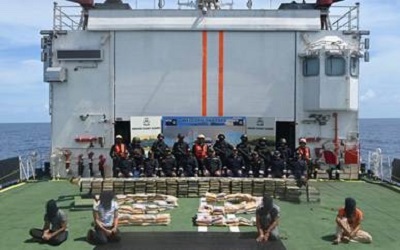
The Indian Coast Guard (ICG), working in close coordination with the Gujarat Anti-Terrorism Squad (ATS), has foiled a major attempt to smuggle narcotics through the Arabian Sea. The operation, conducted on September 25, 2026, resulted in the seizure of approximately 526 kg of high-grade narcotic substances, including heroin and methamphetamine, estimated to be worth more than ₹3,000 crore.
The operation took place in the Arabian Sea, west of Lakshadweep, underlining the increasingly important role of maritime agencies in tackling transnational drug trafficking. The vast expanse of the Indian Ocean provides smugglers with opportunities to move consignments away from conventional land-based surveillance. The latest interception demonstrates how intelligence inputs, persistent surveillance and rapid operational response can be combined to disrupt such networks before narcotics enter the country.
According to the operational details, the Coast Guard acted on specific intelligence regarding the movement of a suspected vessel. ICG assets initiated coordinated sea-air surveillance and maintained continuous tracking of the vessel. Rather than relying on a single interception point, the forces followed the suspicious dhow and monitored its movements before launching a coordinated hot pursuit.
The operation eventually culminated in the interception and boarding of an Iranian dhow in the high seas. During the search, the agencies recovered approximately 526 kg of narcotic substances. Five Pakistani nationals allegedly operating the vessel were apprehended.
The seizure of heroin and methamphetamine is particularly significant because both substances command high value in illicit markets and represent serious challenges for law-enforcement agencies. Large maritime consignments also point towards organised trafficking networks rather than isolated attempts at illegal transportation.
Following the interception, the dhow, the apprehended crew and the seized contraband were brought under armed security and escorted to Mumbai. The decision to shift the vessel and those apprehended to Mumbai allows multiple agencies to undertake a coordinated investigation, including examination of the consignment, interrogation of the crew and efforts to establish the wider supply and distribution network.
The investigation is expected to focus not merely on the individuals found aboard the vessel but also on the larger chain behind the shipment. Maritime narcotics operations often involve multiple stages—from sourcing and transportation to coordination with receiving networks. Identifying these links can be crucial for disrupting future consignments.
The operation also highlights the importance of cooperation between central maritime forces and state-level specialised agencies. Intelligence sharing between the Coast Guard and the Gujarat ATS enabled surveillance to be translated into an operational interception at sea.
For the Indian Coast Guard, the action forms part of its broader responsibility to safeguard India's maritime interests and prevent illegal activities in the country's maritime zones. Drug trafficking by sea intersects with wider concerns relating to organised crime, illicit finance and maritime security, making counter-narcotics operations an important component of coastal and offshore security.





















Leave Your Comment