


In a remarkable display of geopolitical alignment, the often-feuding nations of India, China, and Pakistan have found common ground, standing shoulder-to-shoulder in opposition to a renewed American military presence in Afghanistan. The catalyst for this rare consensus is U.S. President Donald Trump's recent call for the United States to reclaim the strategically vital Bagram Airbase.
This joint stance, a significant diplomatic development, was formalized on Tuesday during the 7th Moscow Format Consultations on Afghanistan—a forum that included Afghanistan’s Taliban leadership, Russia, Iran, and Central Asian countries alongside the South Asian rivals. In a powerful collective statement, the participating nations declared the deployment of foreign military infrastructure in Afghanistan and its neighbourhood "unacceptable," asserting that such a move undermines regional peace and stability.
This marks the second notable instance of these regional powers uniting in response to a Trump-led initiative, the first being the controversial tariffs that impacted global trade. However, this time, the unity is not born of economic grievance but of a shared strategic imperative: preventing an external superpower from re-establishing a military foothold in the heart of Asia.
The Crux of the Matter: Bagram Airbase
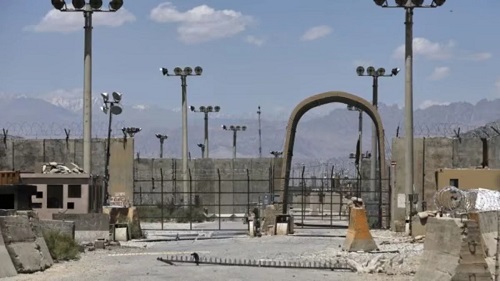
At the center of this diplomatic storm lies the Bagram Airfield. Located in Afghanistan's Parwan province, Bagram was the epicenter of U.S. military operations for two decades. After the chaotic American withdrawal in 2021, control of the massive base reverted to the Taliban. In September 2025, Trump’s public advocacy for the U.S. to "reclaim" this asset sent shockwaves through regional capitals.
The strategic value of Bagram is immense. Its expansive runways are capable of handling the largest military aircraft, making it a crucial hub for rapid deployment and sustained operations. But its true significance lies in its location.
For China, Bagram’s proximity—sitting just 92 kilometers from sensitive Chinese nuclear sites—represents an unacceptable intelligence-gathering opportunity for the U.S. A renewed American presence would serve as a direct check on Beijing’s growing influence in the region, countering its Belt and Road Initiative ambitions and potentially blocking access to Afghanistan's vast, untapped mineral resources.
For India, which has historically opposed foreign military footprints on Afghan soil, the move is seen as a threat to regional stability. New Delhi fears that a U.S. return would re-ignite the very tensions that have plagued the region for decades, creating a new flashpoint and potentially empowering extremist elements. India’s alignment with this position underscores its preference for a sovereign Afghanistan free from becoming a proxy battlefield for great powers.
For Pakistan, the calculus is equally clear. Despite its complex historical relationship with the U.S., the establishment of a permanent American base next door is a red line. It would risk making Pakistan a target for militant groups and would severely constrain its own foreign policy autonomy, forcing it into a geopolitical squeeze between the U.S., China, and the Taliban government it has cautiously engaged.
A New Regional Order Emerges
The joint statement issued by the Russian foreign ministry following the Moscow Format talks is more than just diplomatic rhetoric; it is a declaration of a new regional consensus. By uniting with the Taliban in this opposition, these nations are sending a clear message to Washington: the era of foreign military dominance in Afghanistan is over.
The alliance between India, China, and Pakistan may be temporary and driven by immediate shared interests, but it highlights a profound shift. It demonstrates that when it comes to core strategic concerns—particularly the prevention of a U.S. military outpost in their backyard—even the most intractable rivals can find common cause.





















Leave Your Comment