



Deepak Kumar Rath
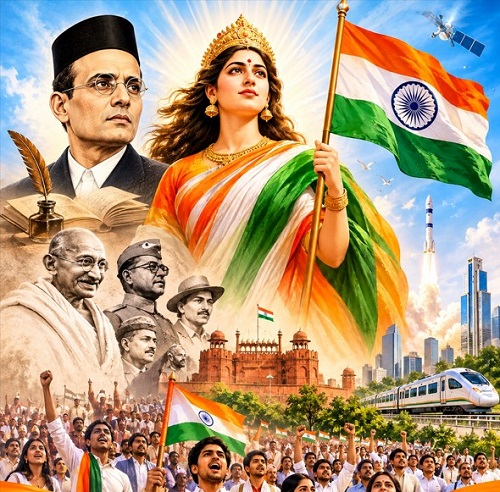
The journey of Vande Mataram, from its literary origins in 1875 to its historic 151-year milestone in 2026, represents an extraordinary chapter in India's cultural and national history. More than a patriotic composition, it evolved into an emotional expression of collective identity, a rallying cry against colonial domination and an enduring symbol of devotion to the motherland. Composed by Bankim Chandra Chattopadhyay in 1875 and subsequently incorporated into his celebrated novel Anandamath, published in 1882, the song captured the emotional and spiritual relationship between the people and their motherland. Through evocative imagery, it portrayed India as a source of nourishment, strength and inspiration. At a time when British colonial rule was undermining India's political independence and cultural confidence, Vande Mataram provided a powerful language of national awakening. Its greatest contribution was to transform patriotism from an individual sentiment into a collective national consciousness. The composition acquired extraordinary prominence during the Swadeshi movement of 1905, which emerged in opposition to the partition of Bengal. It became a popular slogan at public meetings, processions and demonstrations against British rule. Students, intellectuals, revolutionaries and ordinary citizens invoked its words to express resistance, courage and solidarity. The colonial administration's attempts to restrict its public recitation only strengthened its appeal. For countless freedom fighters, chanting Vande Mataram became an assertion that India's national spirit could not be suppressed by foreign authority. Gradually, its influence spread beyond Bengal, connecting people across geographical, linguistic and social boundaries. It gave emotional strength to a freedom movement that was not merely seeking political independence but also attempting to restore India's cultural confidence and civilisational identity.
Following independence, Vande Mataram retained its special place in India's collective consciousness. On January 24, 1950, the Constituent Assembly accorded it the honour of the national song, recognising its historic contribution to the freedom struggle and its enduring emotional significance alongside the national anthem, Jana Gana Mana. In contemporary India, its relevance extends far beyond historical remembrance. As the country advances towards the vision of Viksit Bharat 2047, the spirit of Vande Mataram can inspire citizens to participate in nation-building through education, innovation, scientific advancement, economic development and social responsibility. However, debates surrounding the national song also raise important questions about the relationship between national identity and political interests. The role of appeasement politics in these controversies cannot be ignored. Problems arise when attitudes towards national symbols are determined by religious identity and calculations of political advantage. No person belonging to any religion should face discrimination, and India's traditions have always recognised the importance of respecting diversity. However, respect for diversity cannot mean creating unnecessary divisions over national symbols. Political parties must understand that discussions about the historical significance of Vande Mataram should not be reduced to electoral calculations. Differences of opinion should be resolved through dialogue and historical evidence rather than by exploiting religious sentiments. The Congress, too, should undertake a serious assessment of its historical role and present political approach to this issue. Patriotism in a modern democracy must find expression not merely in slogans but also in responsible citizenship, integrity, public service and respect for constitutional values. The song's enduring message reinforces that India's strength lies in the coexistence of different languages, faiths, traditions and cultural practices within a shared national identity. The 150-year journey of Vande Mataram is ultimately a journey from literary imagination to national awakening, from colonial resistance to democratic nationhood. Its greatest tribute would be an inclusive, confident and prosperous India, proud of its civilisational inheritance and determined to fulfil its national aspirations. Vande Mataram remains not merely an echo of the freedom struggle but an enduring invocation of India's patriotic spirit and collective national identity.




















Leave Your Comment