


Amid heightened tensions in the Middle East and disruptions to global shipping, India has managed to secure safe passage for some of its vessels through the strategically vital Strait of Hormuz. According to S. Jaishankar, India’s direct diplomatic engagement with Iran has enabled Indian-flagged ships to navigate the sensitive maritime corridor despite the ongoing confrontation involving United States and Israel.
The development comes at a time when several ships from different countries remain stranded in the region due to the ongoing conflict and heightened security risks. The strategic waterway—through which a significant portion of the world’s oil and gas supplies pass—has become a focal point of geopolitical tension, raising concerns about global energy security and maritime trade.
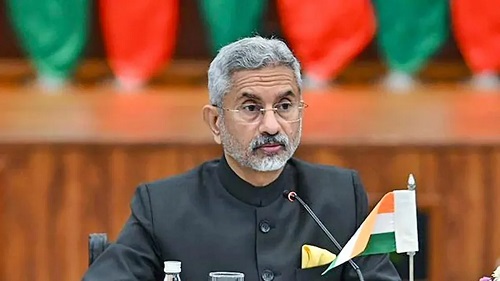
In an interview with the Financial Times, Jaishankar said India’s ongoing dialogue with Tehran has already produced some tangible results. He noted that two Indian liquefied natural gas (LNG) carriers were able to safely cross the Strait of Hormuz because of India’s sustained diplomatic engagement with Iranian authorities.
“I am currently in talks with them and we have achieved some results… This process is ongoing… If this brings results, it is natural that I will continue it,” Jaishankar said.
However, the minister made it clear that there is no permanent or formal arrangement guaranteeing safe passage for Indian vessels. He emphasized that the facilitation of the two LNG carriers was not part of any broader agreement or transactional understanding.
Jaishankar clarified that India does not have a blanket arrangement with Iran for the free movement of all Indian-flagged ships. Instead, each vessel’s passage is being considered individually based on ongoing discussions between the two countries.
“It’s not an exchange issue. India and Iran have a relationship. And this is a conflict that we regard as something very unfortunate,” he explained, underscoring that the engagement is driven by diplomatic goodwill rather than negotiation over concessions.
At the time the two Indian carriers crossed the strait safely, Iranian authorities also permitted several tankers carrying Iranian oil to use the same route, suggesting a limited window of operational movement within an otherwise tense maritime environment.
Despite the successful passage of the two LNG vessels, Jaishankar acknowledged that several more Indian-flagged ships remain in the region awaiting clearance or safer conditions.
“These are still early days. We have many more ships there… So while this is a welcome development, there is continuing conversation because there is continued work on that,” he said.
The situation highlights the delicate balancing act India must maintain as tensions escalate in the Middle East. While India has strong strategic ties with countries across the region, it also depends heavily on energy imports that pass through the Strait of Hormuz.
Meanwhile, Donald Trump has urged several nations to deploy warships to protect commercial shipping through the Strait of Hormuz. The call reflects growing international concern that disruptions in the waterway could trigger a wider global economic shock, given its central role in the transportation of crude oil and natural gas.
For India, however, the approach has been primarily diplomatic rather than military. By maintaining open channels with Iran and other regional stakeholders, New Delhi appears to be seeking a pragmatic solution that ensures the safety of its vessels while avoiding deeper involvement in the conflict.
The Strait of Hormuz is widely regarded as one of the most critical maritime chokepoints in the world. Nearly a fifth of global oil shipments pass through the narrow corridor linking the Persian Gulf with international waters. Any prolonged disruption could significantly affect energy markets, shipping routes, and global economic stability.
India’s success in facilitating the safe passage of some of its ships demonstrates the importance of diplomatic engagement during periods of geopolitical crisis. As negotiations continue and tensions remain high, New Delhi’s careful balancing of relationships across the region will likely play a key role in safeguarding its economic and strategic interests.


















Leave Your Comment