


As we roll into the second half of April, most parts of India have begun to witness the soaring summer temperatures characteristic of Indian summers. However, the advent of a bunch of northern weather events safeguarded a bunch of Western Himalayan states by bringing fresh bouts of showers (and hail!) in the region.
According to the India Meteorological Department (IMD), a western disturbance has set up shop as a trough up north. This, along with a cyclonic circulation near Punjab, will help bring copious amounts of rainfall over the Western Himalayan region and adjoining plains during the next five days.

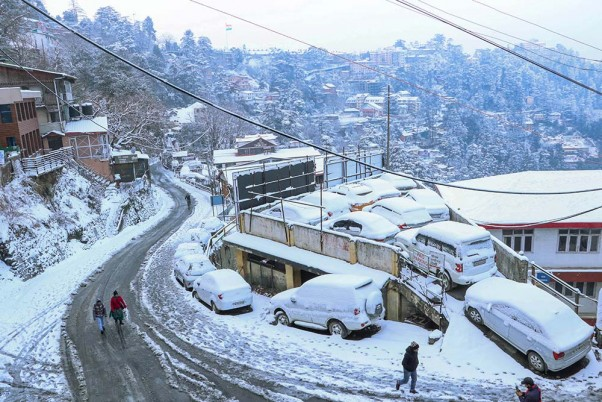
As a result, light to moderate scattered rainfall to inclement weather are seen in Jammu-Kashmir, Ladakh, Uttarakhand, and Himachal Pradesh. Thunderstorms and lightning are accompanying these rains during this time. Snowfalls near Atal tunnel, Solan Valley in Himachal and in Drass sector in Kashmir have been witnessed.
In fact, much of the rainy weather could turn out to be much more intense than usual. According to IMD forecast, these areas are facing hailstorms too.
So why is this happening? Why one part is experiencing heat waves and one part is facing hailstorms/snowfall?

In all probability, this is due to the El Nino Effect. According to the India Meteorological Department (IMD), there is a nearly 70% chance that an El Nino will develop this monsoon, escalating worries that the weather phenomenon could endanger agriculture, consumer spending, and an economy that is still regarded as the fastest-growing in the world and better equipped to withstand global headwinds than most emerging markets.
Today we will tell you what this effect is and how it affects our ecosystem.

El Niño is a phenomenon that refers to the warming of the sea surface temperatures in the Pacific Ocean. It is a part of a larger climate phenomenon known as the El Niño-Southern Oscillation (ENSO), which affects weather patterns worldwide. El Niño is known to have a significant impact on the weather and climate of various regions, including India.
During an El Niño event, the surface water temperature in the central and eastern equatorial Pacific Ocean raises, resulting in a shift in the atmospheric circulation patterns. This leads to a reduction in the trade winds, which are the winds that blow from east to west across the Pacific Ocean, and causes a weakening of the upwelling of cold water along the coast of South America. This results in a decrease in the amount of nutrients available for marine life, affecting the fishery industry.
El Niño is also known to affect the monsoon season in India. The monsoon season, which lasts from June to September, brings about 75% of India's annual rainfall. During an El Niño event, the warming of the Pacific Ocean results in a decrease in rainfall in India, particularly in the central and northern regions. This can lead to droughts and water shortages, affecting agriculture and the livelihoods of millions of people.
In addition to affecting rainfall patterns, El Niño can also result in extreme weather events in India, such as heat waves and floods. During an El Niño event, the temperature in India can rise significantly, leading to heat waves and health issues for people who are particularly vulnerable to heat. In contrast, El Niño can also result in heavy rainfall and flooding in certain regions, particularly in the southern and eastern parts of India.

The impact of El Niño on India's economy can be significant. The agricultural sector, which employs a large portion of the population, can be severely affected by droughts and water shortages. This can lead to a decrease in crop yields, resulting in lower incomes for farmers and higher food prices for consumers. In addition, the fisheries industry can also be impacted, as the decrease in nutrient availability affects the growth and reproduction of fish populations.
To mitigate the impact of El Niño on India, the government has taken various measures, such as promoting drought-resistant crops, implementing water conservation measures, and providing subsidies and financial assistance to farmers. However, given the unpredictability of El Niño events, it can be challenging to prepare for and manage their impact.
In conclusion, El Niño is a climate phenomenon that has significant implications for India's weather patterns, economy, and livelihoods. The impact of El Niño can result in droughts, water shortages, extreme weather events, and lower crop yields, affecting millions of people. While efforts to mitigate its impact are ongoing, continued research and preparation are needed to manage the impact of El Niño on India effectively.
Posted By Uday India





















Leave Your Comment