


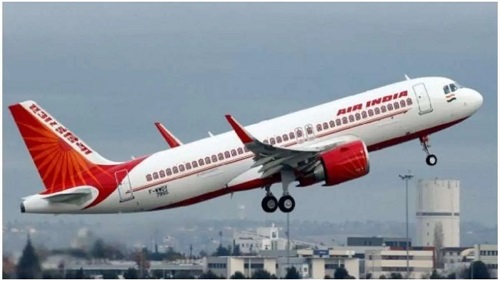
India’s flagship carrier Air India is set to scale back its international operations through July, as rising fuel costs and restricted airspace continue to strain profitability. The decision, announced by CEO and Managing Director Campbell Wilson, reflects the mounting challenges faced by global airlines navigating geopolitical and economic turbulence.
In an internal communication to staff, Wilson highlighted the “massive rise” in Aviation Turbine Fuel (ATF) prices, coupled with extended flight routes due to airspace closures, as key reasons behind the move. These factors have rendered several international routes financially unviable, forcing the airline to “further trim schedules for June and July.” The airline had already reduced some services in April and May in response to similar pressures.
The financial strain on Air India is significant. According to reports, the airline recorded losses exceeding ₹22,000 crore in the financial year 2025–26. The latest operational cuts underscore the difficulty of maintaining international connectivity while grappling with escalating input costs and disrupted flight paths.
A major contributor to this crisis is the sharp increase in jet fuel prices. On Friday, ATF rates for international flights were raised by over 5 percent, marking the second consecutive monthly hike. Fuel prices have been climbing steadily since tensions escalated in the Middle East, particularly amid the ongoing conflict involving United States and Iran. The situation has disrupted global supply chains and added volatility to energy markets.
As per state-owned oil companies, ATF in Delhi is now priced at USD 1,511.86 per kilolitre—an increase of USD 76.55 per kilolitre. This follows a steep hike on April 1, when domestic fuel prices rose by 25 percent to ₹104,927.18 per kilolitre. Notably, domestic ATF rates have remained unchanged in the latest revision, providing some relief for internal routes.
Wilson also pointed to the impact of restricted airspace, particularly in regions affected by geopolitical tensions. Airlines have been forced to take longer alternate routes, increasing fuel consumption and operational costs. He expressed hope that the situation in the Middle East stabilizes soon, specifically mentioning the need for smoother passage through critical maritime corridors like the Strait of Hormuz, which plays a crucial role in global energy transportation.
“We very much regret the disruption to our customers’ plans and our crew’s rosters,” Wilson said, acknowledging the inconvenience caused by reduced flight schedules. He added that the airline is keen to return to normal operations once conditions improve.
Jet fuel prices in India have been deregulated for over two decades and are linked to international benchmarks. This alignment exposes airlines to global price fluctuations, making them particularly vulnerable during periods of geopolitical instability.
As Air India navigates this challenging phase, the coming months will be critical in determining how quickly the airline—and the broader aviation sector—can recover from the dual pressures of rising costs and constrained airspace.





















Leave Your Comment