


The Foreigners Regional Registration Office’s reported direction to actor Imran Khan to leave India by October 28 has brought the intersection of immigration regulations, political participation and civil liberties into focus. The action followed a complaint by BJP leader Kirit Somaiya, who questioned whether the actor, described as a US citizen holding an Overseas Citizen of India (OCI) card, should have participated in a protest against Chief Election Commissioner Gyanesh Kumar.
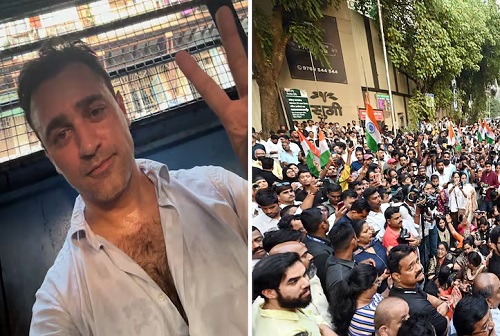
The reported notice issued to actor Imran Khan by the Foreigners Regional Registration Office (FRRO) has transformed his participation in a political demonstration into a wider debate over the rights and responsibilities of foreign nationals living in India. The actor, who is reported to hold US citizenship and an OCI card, was asked to leave the country by October 28 following a complaint by BJP leader Kirit Somaiya regarding his participation in a protest against Chief Election Commissioner Gyanesh Kumar in Mumbai on October 10.
According to a Mumbai Police official, the FRRO served the notice to Khan, who resides in Mumbai's Khar area. Somaiya had approached the authorities seeking verification of the actor's citizenship and questioning his involvement in what he described as political agitation against the government.
The case presents two distinct issues that need to be examined separately: the legal conditions governing the stay of foreign nationals in India and the question of their participation in political demonstrations. Although the two issues overlap in this instance, neither should automatically be treated as proof of the other.
An Overseas Citizen of India card provides eligible foreign citizens of Indian origin with certain immigration and residency-related privileges. However, OCI status is not equivalent to Indian citizenship and does not confer the full political rights enjoyed by Indian citizens.
OCI cardholders are subject to specific conditions under Indian law and government notifications. Their eligibility to reside in India does not automatically entitle them to participate in every form of political activity on the same terms as Indian citizens. The precise legal implications depend on the nature of the activity, the applicable rules and the grounds cited by the authorities.
Consequently, the central question is not simply whether Imran Khan holds a US passport. It is whether his reported participation in the demonstration violated an applicable legal condition and, if so, what consequences the law permits.
The reported departure notice makes the grounds and procedural basis of the FRRO's decision particularly important. The information provided does not establish the specific provision invoked by the authorities or whether Khan has been given an opportunity to challenge the decision. Those details are necessary to assess the legality and proportionality of the action.
Somaiya has welcomed the authorities' move, saying he had sought information about how long Khan had held US citizenship. He also questioned the propriety of a foreign national taking part in political agitation against the Indian government.
His position reflects a legitimate area of public policy debate: governments can prescribe conditions for foreign nationals residing within their territories. However, a complaint by a political leader and the subsequent action by an administrative authority are separate matters. The latter must stand on the applicable law and the evidence available to the competent authorities.






















Leave Your Comment