


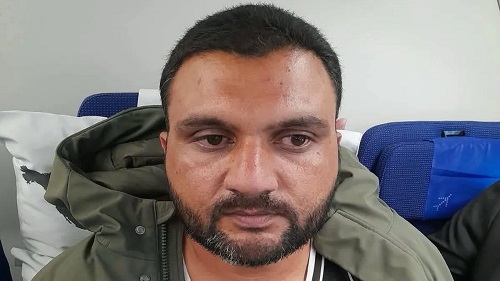
The return of alleged international drug kingpin Navpreet Singh from Türkiye marks another significant development in India’s efforts to pursue narcotics networks beyond its borders. Union Home Minister Amit Shah said on Saturday that Indian agencies succeeded in tracing Singh despite his use of a different identity and securing his deportation to India. Singh has now been placed in custody in connection with cases relating to drug trafficking and other alleged offences. The development also brings renewed attention to a transnational narcotics investigation that has its roots in a major heroin seizure in the Delhi-NCR region.
According to Shah, Navpreet Singh had obtained Turkish citizenship using the identity of Navab Virk and allegedly continued to facilitate the smuggling of heroin and methamphetamine from Afghanistan to India. The Home Minister credited Indian agencies with uncovering his identity and tracking him down in Türkiye. He said the government remains committed to dismantling narco-cartels and has set a target of eliminating such networks by December 2029.
The significance of Singh's return lies not merely in the arrest of an accused individual but in the potential information his interrogation could provide about the structure, finances and international connections of the alleged syndicate. Investigators have been examining a network that reportedly extended across India, Afghanistan and Türkiye, with several people allegedly playing different roles in the movement and distribution of narcotics.
The investigation dates back to 2021, when Delhi Police's Special Cell arrested Rizwan Ahmed alias Rizwan Kashmiri in south Delhi in connection with heroin trafficking. His interrogation, according to police records, helped investigators uncover a wider network operating across Delhi, Punjab, Haryana and Madhya Pradesh and involving Afghan nationals. Subsequent searches in Faridabad resulted in the recovery of large quantities of heroin.
Investigators recovered about 166 kg of heroin from one vehicle and another 115 kg from a second vehicle. Further recoveries were also made from premises linked to the accused. Court records have subsequently referred to total recoveries of more than 350 kg of narcotic substances in the case.
The probe allegedly established links to Navpreet Singh, also known as Nav, who was described by investigators as being based in Türkiye. His cousin, Prabhdeep Singh, was allegedly an important operational link within India. Police have said Prabhdeep was involved in communicating instructions and monitoring the movement of narcotics consignments.
The international dimension of the investigation became clearer as suspects moved outside India. Earlier this year, Prabhdeep Singh was brought back from Azerbaijan following extradition proceedings. The CBI and Delhi Police were involved in the operation, with Interpol channels and diplomatic agencies playing a role. Investigators had earlier obtained a Red Notice against him.
The Azerbaijan episode provided another indication of how investigators were pursuing the network across jurisdictions. Prabhdeep had allegedly fled India and subsequently moved through different countries. His return gave investigators an opportunity to question him about the alleged syndicate and its international links.
Navpreet Singh's deportation from Türkiye now adds another important piece to that investigation. His custody could potentially help agencies establish how narcotics were sourced, transported and distributed, although the allegations against him will ultimately be tested through the judicial process.
The case also illustrates the changing nature of India's fight against organised narcotics trafficking. Drug networks increasingly operate through multiple countries, use aliases and rely on intermediaries in different jurisdictions. Consequently, conventional investigations within one geographical area are often insufficient to identify those allegedly controlling the larger network.
For Indian enforcement agencies, the latest development therefore represents both an arrest and an opportunity to pursue the wider architecture of the alleged syndicate. The focus is likely to remain on identifying financial channels, overseas associates, supply routes and domestic distribution networks.
The government's stated objective of dismantling narco-cartels by 2029 places such international cooperation at the centre of its anti-drug strategy. The return of Navpreet Singh from Türkiye, following the earlier extradition of an alleged associate from Azerbaijan, underscores how investigations into organised narcotics trafficking can increasingly stretch across borders—and how international coordination has become essential to bringing fugitives back to face proceedings in India.





















Leave Your Comment