


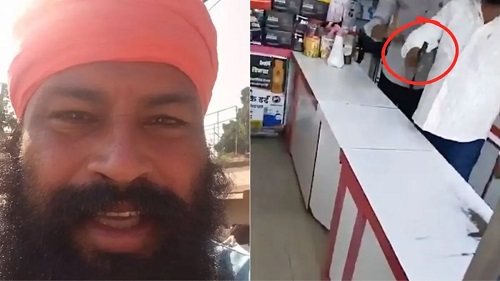
The killing of anti-drug activist Parvinder Singh Jhota in Punjab’s Mansa district has brought the state’s drug crisis and law-and-order situation under renewed scrutiny. Jhota, who had been using social media livestreams to expose what he alleged was the open sale of heroin, was shot during a confrontation at a medical store and later died at Mansa Civil Hospital. His death has raised troubling questions about the safety of citizens who challenge the alleged drug trade, the effectiveness of the state’s anti-narcotics campaign and the accountability of those responsible for enforcing the law.
The death of Parvinder Singh Jhota has transformed an alleged drug-sale confrontation in Mansa into a larger political and public debate over Punjab’s continuing struggle against narcotics. For years, Jhota had campaigned against drug abuse and used social media broadcasts to draw attention to what he described as the easy availability of addictive substances. His approach placed him directly in the path of controversy, but the fatal shooting has raised a more fundamental question: can citizens safely challenge suspected illegal activities when they believe the authorities are not doing enough?
According to reports, the confrontation took place on Tuesday morning at a medical store in Mansa. Jhota was livestreaming when he allegedly questioned the shop owner about the sale of chitta, a term commonly used in Punjab for heroin. During the exchange, he reportedly demanded access to CCTV footage and referred to an elderly man who, according to his claims during the confrontation, had purchased drugs from the shop.
The argument escalated rapidly. The shop owner was identified in reports as Ashwani Kumar, who allegedly brandished a pistol and opened fire. The livestream reportedly captured the confrontation and the sound of gunshots. Jhota suffered multiple bullet injuries and was taken to Mansa Civil Hospital, where he succumbed to his wounds. Reports also indicated that four of his companions sustained bullet injuries and were hospitalised.
The precise sequence of events, the circumstances surrounding the alleged drug transaction and the responsibility for the shooting must be established through a fair investigation. Nevertheless, the reported violence has intensified public concern over the intersection of drug trafficking, local disputes and access to firearms.
The killing has prompted sharp criticism of the AAP government led by Chief Minister Bhagwant Mann. The party came to power in Punjab in 2022 with a strong promise to confront the drug menace, which has remained a major social and political concern in the state. Its commitment to tackling narcotics was central to expectations that the government would strengthen enforcement, disrupt supply networks and address the devastating consequences of addiction.
The latest incident has therefore become more than a criminal case. Opposition leaders have questioned whether the government has succeeded in creating an environment in which people can report suspected drug-related activities without fear of violence.
The BJP’s national president condemned Jhota’s killing in a post on X, saying: "The killing of anti-drug activist Parvinder Singh Jhota in Mansa is shocking and exposes the alarming state of law and order in Punjab under the AAP government. The Aam Aadmi Party came to power promising a drug-free Punjab. Today, those who stand up against drugs are themselves at risk. This is a serious failure of governance. If those fighting the drug mafia are not safe, who is safe in Punjab? The people of Punjab deserve answers and accountability."
Such political reactions reflect a wider concern, but the incident must also be examined beyond the immediate contest between the ruling party and its opponents. A serious response requires the authorities to establish the facts, identify those responsible and explain what preventive measures could have reduced the risk of violence.
Punjab’s drug problem cannot be addressed through slogans or isolated enforcement drives alone. It requires sustained action against suppliers, effective intelligence gathering, coordination among law-enforcement agencies and accessible treatment for people struggling with addiction. Equally important is the ability of ordinary citizens to report suspected illegal activities through channels that do not expose them to retaliation.





















Leave Your Comment