


India is not just the world’s largest democracy by population, it is also a vibrant and diverse nation with a rich democratic culture. At the heart of this democracy lies a free press and a responsible media. The media has the power to inform, educate, unite and also to question. It can be a bridge between the government and the people, and a voice for the voiceless. But the Big question remains : Is the media in India truly fulfilling it’s democratic duty freely and fairly ?
The Ideal Role of the Media
In a democracy, the media acts as the forth pillar of the constitution, alongside the legislature, executive and judiciary. It’s key responsibilities include:
• Providing accurate, balanced, and unbiased information
• Holding power to account
• Giving platform to different voices and views
• Exposing corruption and wrong doing
• Educating the public and promoting informed citizenship.
The current Reality
In today’s India the media landscape is both inspiring and concerning. On one hand, we have selfless journalists who risk their lives to bring out truths- from ground reports on natural disasters to investigative stories on corruption and injustice. On the other hand, there are growing concerns that the media is sometimes influenced by political, corporate and commercial interests.
The pressure of TRPs social media trends and advertising revenue often leads to sensationalism rather than substance. Objectivity can be lost in the race for exclusives. The rise of paid news, fake news and targeted propaganda has further compromised the credibility of media.
The Impact of the People
When the media is free and fair, people become better informed, more aware and more active in the democratic process. They can make better decisions, hold their leaders accountable and demand change. But when the media is biased or manipulated, it can mislead the public, divide society, and weaken democracy itself.
Challenges before the Media
• Political Pressure – Creating Biased coverage & Self- Censorship.
• Corporate Control – Leading to Conflicts of Interest.
• Sensationalism – Prioritising drama over facts.
• Fake news & Misinformation – Misleading the public & spreading fear & division.
• Declining Trust – due to repeated instances of unethical practices.
Is India's Media Free, Fair and Responsible?
In the world's largest democracy, the press has the power to question those in power—but who questions the press?
A free press must have the courage to question power—and the integrity to question itself.
India's democracy is sustained by much more than elections. It depends upon constitutional institutions, an informed citizenry, freedom of expression, an independent judiciary, accountable governments—and a media capable of informing citizens and scrutinising those who exercise power.
This places an extraordinary responsibility on journalism -
The Indian media is vast, multilingual and diverse. Newspapers, television channels, news agencies, magazines, digital publications, independent journalists and social-media news creators reach hundreds of millions of people. The digital transformation has made news more accessible than ever before. According to the Reuters Institute's Digital News Report 2026, a majority of surveyed Indian respondents obtain news online, while more than half use social media for news. Television remains significant, with 44% of respondents reporting it as a source of news.
But accessibility is not the same as credibility, and plurality does not automatically guarantee independence.
This brings us to an important democratic question -
Is India's media discharging its duty freely, fairly and responsibly?
The answer is neither entirely affirmative nor entirely negative.
Freedom : The Foundation of Journalism
Freedom of expression is protected under Article 19(1)(a) of the Constitution, subject to the reasonable restrictions provided under Article 19(2). Freedom of the press is understood as an important component of this constitutional protection.
The Press Council of India describes its own role as preserving the freedom of the press while maintaining and improving the standards of newspapers and news agencies. Its journalistic norms emphasise the need to balance freedom with responsibility.
That balance is fundamental
A journalist must be free to ask uncomfortable questions. A newspaper must be free to investigate alleged wrongdoing. A television channel must be free to scrutinise government decisions. At the same time, journalism cannot claim freedom as a licence to publish unverified allegations, distort facts or deliberately mislead audiences.
Freedom without responsibility can damage democracy; responsibility without freedom can weaken it.
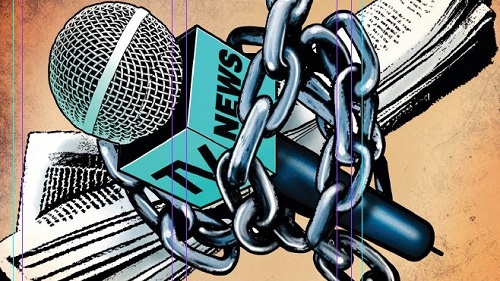
India's Media: Diverse, Vibrant and Changing
One of India's greatest strengths is its extraordinary linguistic and regional diversity.
A story that may receive little attention in Delhi can be of enormous importance in Odisha, Kerala, Assam, Maharashtra or the Northeast. Regional newspapers and television channels often bring local issues, culture and public concerns into national conversations.
The digital revolution has expanded this diversity further. Independent journalists and smaller digital organisations can now reach audiences without requiring the infrastructure of a traditional media house.
The Reuters Institute's 2026; India report describes a news environment involving mainstream organisations, regional-language outlets, independent journalists and new video-based news creators. This is a significant democratic development.
But it has another side; The same digital environment that enables journalism can also accelerate misinformation, sensationalism and unverified claims.
Who Owns the Media Matters ?
Media freedom is not simply about whether a journalist is legally permitted to publish a story.
It is also about who owns the organisation, who finances it, who advertises in it and what commercial or political relationships surround it.
The Reuters Institute's 2025; India report highlighted concerns about concentrated media ownership and pressures affecting independent media and journalists critical of the government. At the same time, it noted collaborative efforts among independent digital news organisations offering alternative coverage and analysis. These observations point to an important principle:
Media plurality is meaningful only when editorial independence is protected.
A newsroom may have considerable freedom on paper, yet commercial or ownership pressures can influence which stories receive prominence, how they are presented and which issues receive sustained attention.
This is why transparency in ownership and financing is important to public trust.
The Government and the Media
The relationship between government and media is naturally complicated. Governments require communication channels to explain policies and respond to public criticism. Journalists, meanwhile, have a democratic responsibility to scrutinise governments and ask difficult questions.
A healthy relationship therefore cannot mean either unquestioning support or automatic opposition.
The journalist's fundamental question should be:
What are the facts, what evidence supports them, and what does the public need to know?
This standard should apply whether the government is popular or unpopular, whether the issue concerns national security or a local civic problem, and whether the political party in question is in power or in opposition.
The media should neither become a government spokesperson nor an automatic opponent of government. Its primary allegiance should be to truth, evidence and the public's right to know.
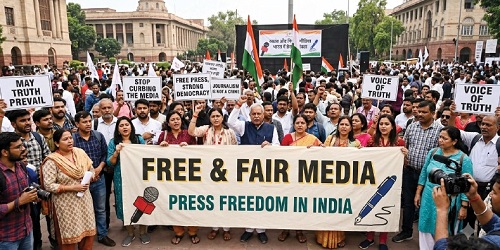
Press Freedom
Concerns That Cannot Be Ignored - International assessments have raised concerns about India's press environment. Reporters Without Borders' 2026 World Press Freedom Index places India at 157th out of 180 countries, compared with 151st in 2025. Its assessment identifies political, economic, legal, social and security dimensions of press freedom. Such international rankings should be read carefully. They are based on particular methodologies and expert assessments and cannot capture every aspect of India's enormous and diverse media environment.
Nevertheless, they highlight issues worthy of public discussion.
The Reuters Institute has also reported concerns about pressures on independent journalists and media organisations. Its 2026 report refers to developments involving content regulation and the sealing of the United News of India premises in Delhi, which journalist organisations criticised as excessive.
The larger principle is clear : Journalists must be able to perform legitimate professional duties without intimidation or unreasonable interference.
But Who Will Question the Media?
There is another side to this debate which deserves equal attention.
The media itself must be accountable.
In today's highly competitive news environment, the race for television ratings, website traffic, advertising revenue and social-media engagement can create incentives for sensational headlines and emotionally charged presentation.
Sometimes the headline becomes more important than the story.
Sometimes opinion appears in the form of news.
Sometimes a social-media claim becomes a television debate before anyone has properly verified it.
And sometimes an allegation receives enormous publicity while the subsequent correction receives very little.
The Press Council of India's journalistic norms specifically emphasise accuracy and fairness and caution against inaccurate, baseless, misleading or distorted material.
These are not merely professional necessities.
They are democratic necessities.
Paid News - A Threat to the Voter's Right to Know
Paid news represents one of the clearest examples of the conflict between commercial interests and journalistic integrity.
The Press Council defines paid news as news or analysis appearing in media for consideration in cash or kind. It has particularly highlighted the democratic consequences of paid news during elections because voters may be denied an accurate picture of a candidate or issue.
During election periods, the distinction between advertising and independent journalism becomes especially important. Citizens have the right to know whether something is editorial content, political advertising, sponsored material or independent reporting.
Transparency protects both the reader and the credibility of the media organisation.
The New Challenge: Social Media
The traditional newsroom is no longer the only gateway to information. A smartphone can record an event, transmit it instantly and potentially reach millions of people. This has democratised information—but it has also created a new responsibility.
A citizen's video may be genuine, misleading, incomplete or entirely unrelated to the claim accompanying it. Artificial intelligence and sophisticated digital manipulation make verification increasingly important.
The question is no longer simply: "Who published this?"
It is also: "How do we know it is true?"
News organisations therefore need stronger fact-checking and verification systems, while citizens need greater media literacy.
Important Principles of Responsible Journalism are:
• Truth before speed
• Verify before publishing
• Separate news from opinion
• Give relevant voices a fair hearing
• Disclose conflicts of interest
• Identify sponsored content
• Correct mistakes openly
• Protect journalistic independence
• Avoid unnecessary sensationalism
• Remember the public interest
The Four Pillars of Credible Journalism like FREEDOM, FAIRNESS, ACCURACY & ACOUNTABILITY can be four principles together provide a useful test of the health of journalism.
What Should Citizens Expect?
Citizens should expect neither a "pro-government" media nor an "anti-government" media. They should expect a public-interest media. And citizens themselves have also a responsibility.
The Road Ahead !
India's media is passing through a historic transition. The traditional newspaper and television newsroom now coexist with websites, podcasts, YouTube channels, social-media accounts, newsletters and independent digital journalists. This transformation has created enormous opportunities. But it also makes professional ethics more important—not less.
The Press Council of India continues to emphasise the balance between press freedom and responsibility, while its recent activities have included guidance concerning paid news, election reporting and misinformation.
The future of Indian journalism will depend not merely upon the number of media outlets, but upon the quality, independence and credibility of the information they provide.
The way forward - For the media to truly serve democracy, several steps are essential:
• Stronger media ethics & self regulation
• Greater transparency in ownership & funding
• Protection for journalists & freedom of expression
• Media literacy among the public
• Use of technology to combat fake news
• Responsibility over reach – quality should matter more than quantity
Conclusion
A free & fair media is not a luxury; it is a necessity. In the world’s largest democracy, we must ensure that the media remains independent, responsible, and public-centric. Only then can it continue to be the true voice of the nation – informing citizens, challenging injustice and strengthening the foundation of our democracy.. Hence, a free press builds an informed citizenry.. and an informed citizenry builds a stronger India.
(The content of this article reflects the views of writer and contributor, not necessarily those of the publisher and editor. All disputes are subject to the exclusive jurisdiction of competent courts and forums in Delhi/New Delhi only)




















Comments (1)
D
Nicely narrated.