


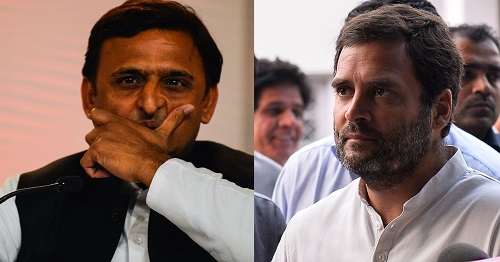
The road to the 2027 Uttar Pradesh Assembly elections has begun exposing the differences between the Samajwadi Party (SP) and the Congress over their respective political ambitions and bargaining power. Even as both parties explore the possibility of contesting the polls together, the first seat-sharing proposal from Akhilesh Yadav's party has indicated that the Congress may have to settle for considerably fewer constituencies than it is seeking. The SP has reportedly offered 26 seats to its INDIA bloc partner, while the Congress is demanding 120, setting the stage for potentially difficult negotiations within the opposition alliance.
The 26-seat proposal is significant not merely because of the wide gap between the two parties' expectations, but also because it reflects the SP's reluctance to surrender a substantial portion of its political space in India's most electorally significant state. Uttar Pradesh has 403 Assembly constituencies, and the SP, under Akhilesh Yadav's leadership, is keen to retain its position as the principal opposition force while accommodating the Congress within the alliance.
According to reports, the SP's proposed list comprises two constituencies that the Congress won in the previous Assembly election, four where it finished second and another 20 where the SP believes its own electoral performance provides a stronger basis for allocating tickets. Ram Gopal Yadav subsequently explained that the SP had secured between 60,000 and 70,000 votes in these 20 constituencies, whereas the Congress had received only around 2,000 votes. This suggests that the regional party is approaching the negotiations primarily through the prism of electoral performance rather than the Congress's national political standing.
The Congress, however, has a different assessment of its political strength. Having initially sought 181 seats, it reportedly reduced its demand to approximately 120, identifying at least 50 constituencies where it believes it has a realistic chance of winning. Its negotiators have also emphasised the importance of retaining a strong presence in constituencies associated with its parliamentary victories. These include Raebareli, Saharanpur, Barabanki, Sitapur, Amethi and Allahabad. The party has additionally sought representation in all 75 districts, arguing that a geographically wider presence would help strengthen its organisational network across the state.
The difference between the two positions highlights a fundamental question confronting the INDIA bloc partners: should seat distribution be determined by the strength of individual parties or by the collective electoral potential of the alliance? For the Congress, a larger share of constituencies would provide an opportunity to rebuild its organisation in a state where its electoral influence has diminished considerably. For the SP, however, allocating too many seats to its ally could weaken its own prospects and create unnecessary competition within its traditional political strongholds.
The electoral record offers arguments to both sides. In the 2022 Assembly elections, the SP secured 111 seats, while the Congress managed to win only two. The Congress had contested 399 constituencies, whereas the SP fought on 347 seats. This poor performance provides the SP with a strong argument for a relatively modest allocation. However, the political situation changed considerably during the 2024 Lok Sabha elections, when the two parties contested together as INDIA bloc partners. The SP won 37 parliamentary constituencies and the Congress secured six of the 17 seats it contested. Their improved performance demonstrated that coordinated opposition campaigning could produce electoral dividends.
Ultimately, the 26-seat proposal should be viewed as an opening negotiating position rather than a final settlement. The real test for both parties will be whether they can accommodate their competing ambitions without allowing disagreements over constituencies to undermine their broader political objective. In Uttar Pradesh, where electoral calculations are shaped by caste equations, regional influence, candidate acceptability and local organisational strength, a successful alliance requires much more than an agreement on numbers. It requires a credible understanding of how political resources can be combined to challenge an established electoral opponent.






















Leave Your Comment