


At least 19 people have died in two Nagaland districts over the past two days after allegedly consuming spurious liquor, exposing the dangerous gap that can emerge between a legal prohibition regime and the illicit market operating beneath it. While the police investigation is now focused on identifying the source and supply chain of the suspected adulterated liquor, the incident also raises broader questions about enforcement, public awareness and the availability of unsafe alcohol outside the regulated system.
Illicit Liquor has Turned into a Public Health Crisis in Nagaland, where 19 people have died after consuming spurious liquor. The deaths were reported from Mokokchung and Tuensang districts, where eight and 11 people respectively are said to have died following consumption of suspected illicit liquor. The deaths have triggered a major police operation as authorities attempt to establish whether the victims consumed liquor from a common source.
The case is particularly significant because Nagaland has had a prohibition law in place since 1990. The latest incident therefore highlights a central challenge associated with prohibition: banning the sale and consumption of alcohol does not necessarily eliminate demand. When alcohol moves outside legal and regulatory channels, authorities can face greater difficulty monitoring its manufacture, ingredients, distribution and quality.
Police have constituted a Special Investigation Team headed by Additional Superintendent of Police I Bunglang Chang. The SIT has been tasked with investigating the deaths and tracing the source and supply chain of the suspected adulterated liquor.
Senior Superintendent of Police Vesupra Kezo said police had obtained some leads but that it was too early to disclose details. Samples have also been sent to Guwahati for forensic examination. The laboratory analysis will be important in determining what substance or substances were consumed and whether the deaths were directly caused by contaminated or adulterated liquor.
At this stage, the deaths are being linked to suspected illicit liquor, but the precise cause must be established through medical and forensic investigation. Establishing the chemical composition of the samples, identifying the product's source and determining how it reached consumers will be crucial to building the case.
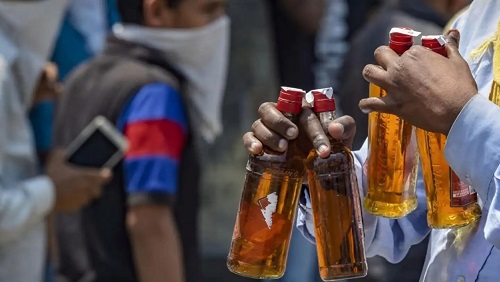
The authorities have responded with raids across the affected areas. Police have arrested 19 people in connection with the case and seized nearly 3,000 bottles of liquor.
The scale of the seizure suggests that investigators are examining the incident not simply as an isolated case of individual consumption but as a possible organised supply network. The key questions will include where the liquor was produced, who transported it, how it was distributed and whether multiple intermediaries were involved.
The investigation could also reveal whether the suspected liquor was deliberately adulterated, improperly manufactured or illegally brought into the state. Each possibility carries different implications for enforcement and accountability.
The tragedy also demonstrates why illicit alcohol can be particularly hazardous. Unlike regulated products, unlabelled or illegally manufactured liquor may contain unknown ingredients or dangerous contaminants. Consumers generally have no reliable way of knowing its composition, strength or manufacturing conditions.



















Leave Your Comment